


A procurement manager at a chemical plant once ordered MS grating for an outdoor acid-wash area because it was cheaper and delivery was faster. Eighteen months later, the grating had corroded badly enough to become a safety concern. Replacement cost, downtime, and the plant safety audit that followed — none of that was in the original budget.
This happens more than it should. Grating looks like a straightforward purchase. It is not. The wrong type in the wrong environment costs significantly more in the long run than buying right the first time.
This guide is written to help you buy right the first time.
What Are Metal Gratings?
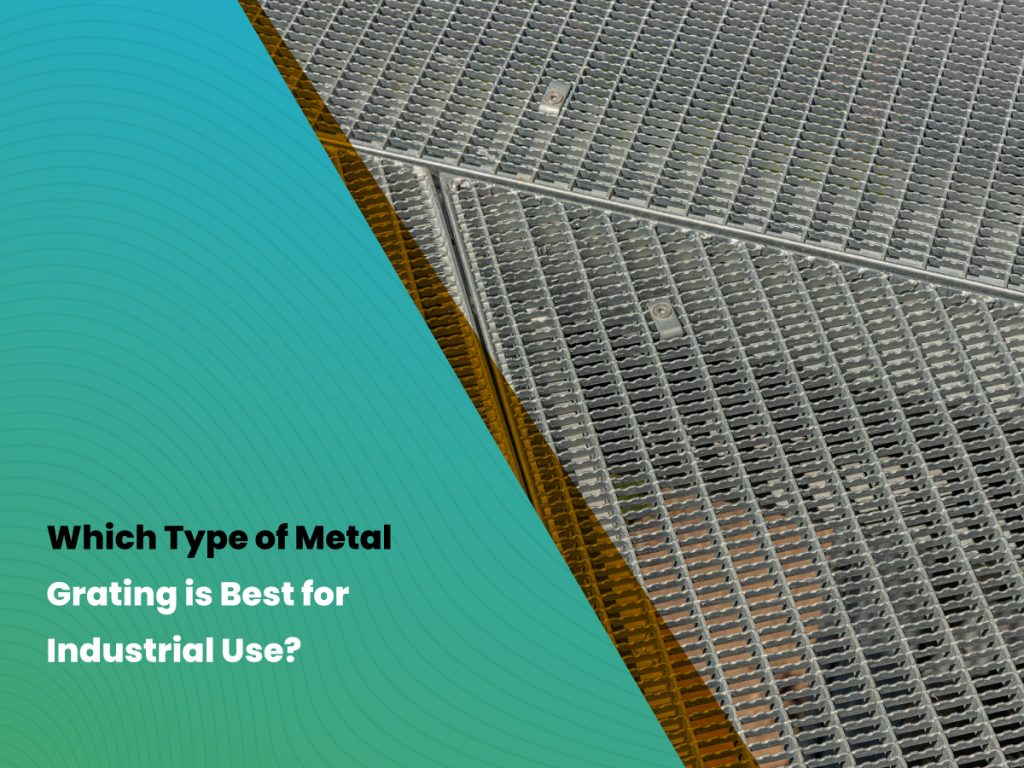
Metal gratings are load-bearing platforms made from interlocked or welded metal bars, used for walkways, flooring, drainage covers, stair treads, platforms, and equipment access areas in industrial facilities.
They are engineered to carry specific loads, allow drainage and ventilation underneath, and provide a slip-resistant walking surface. In industrial plants — refineries, chemical units, power plants, food processing facilities — gratings are everywhere. They are not glamorous, but when one fails, the consequences are serious.
The three main types used in India’s industrial sector are MS grating, GI grating, and FRP grating. Each has a different material basis, different strengths, and a different set of applications where it performs best.
Types of Metal Gratings
MS Grating (Mild Steel)
MS grating is fabricated from mild steel flat bars and cross bars, welded or press-locked together. It is the most widely used grating type in India across heavy industries.
It is strong, cost-effective, and available in a wide range of bearing bar sizes and spacings. For applications where load capacity is the dominant requirement and the environment is not aggressively corrosive, MS grating is the workhorse solution.
You will find it on mezzanine floors, industrial walkways, machine platforms, and structural access areas in steel plants, automobile factories, and power generation facilities.
The limitation is straightforward — bare MS grating will rust. In humid conditions, outdoors, or anywhere moisture is present regularly, uncoated MS grating will deteriorate. It can be painted or coated, but maintenance is ongoing.
GI Grating (Galvanized Iron / Hot-Dip Galvanized Steel)
GI grating starts with the same structural base as MS grating but goes through hot-dip galvanizing — a process where the fabricated grating is dipped in molten zinc, creating a metallurgically bonded zinc coating over every surface, including the inside of joints.
This is not a paint job. Hot-dip galvanizing adds genuine corrosion protection that lasts decades in most outdoor environments. The zinc coating acts as a sacrificial barrier — even if the surface is scratched, the zinc corrodes preferentially and protects the underlying steel.
For outdoor walkways, rooftop platforms, infrastructure projects, and coastal installations, GI grating is the practical choice. The upfront cost is higher than MS grating but the lifecycle cost is considerably lower because maintenance requirements drop sharply.
FRP Grating (Fiber Reinforced Plastic)
FRP grating is not metal at all — it is a composite material made from glass fibre and resin. It is included in grating comparisons because it directly competes with metal grating in specific environments where metal simply does not hold up.
FRP grating does not corrode, period. It is electrically non-conductive. It is significantly lighter than steel grating. and It can be manufactured with a very aggressive anti-slip surface. And it handles chemical exposure — acids, alkalis, solvents — that would destroy MS or GI grating within months.
The trade-off is load capacity. FRP grating cannot match steel for heavy structural loads. For light to medium foot traffic platforms in chemically aggressive environments, it is the right material. For equipment platforms carrying machinery or heavy dynamic loads, it is not.
MS vs GI vs FRP Grating — Comparison Table
| Feature | MS Grating | GI Grating | FRP Grating |
| Material | Mild Steel | Hot-dip Galvanized Steel | Glass Fibre + Resin |
| Load Capacity | High | High | Medium |
| Corrosion Resistance | Low (without coating) | High | Very High |
| Chemical Resistance | Low | Low-Medium | Excellent |
| Weight | Heavy | Heavy | Light |
| Electrical Conductivity | Yes | Yes | No (Non-conductive) |
| Maintenance Requirement | High | Low | Very Low |
| Upfront Cost | Lowest | Medium | Medium-High |
| Lifecycle Cost | Higher | Lower | Lower |
| Best Environment | Dry, indoor, heavy load | Outdoor, coastal, humid | Chemical, corrosive, wet |
Which Grating is Best for Different Applications?
Heavy Load Industrial Floors and Mezzanines
MS grating is the answer here. If the environment is controlled — inside a factory, away from moisture and chemicals — there is no reason to spend more on GI or FRP. Specify the right bearing bar size for the load, ensure proper surface treatment for the indoor environment, and MS grating will give you decades of reliable service.
Outdoor Platforms, Walkways, and Infrastructure
GI grating is what belongs here. Open to weather, exposed to humidity, potentially near coastal air — these conditions will destroy unprotected MS grating faster than most buyers expect. The galvanized coating handles all of this without ongoing maintenance. For bridges, rooftop service platforms, outdoor staircases, and utility walkways, GI grating is the default recommendation.
Chemical Plants, Effluent Treatment Areas, and Wet Process Zones
FRP grating. No debate. Chemical environments that involve acids, alkalis, chlorine compounds, or persistent water contact will corrode steel grating — galvanized or not — over time. FRP grating in these environments is not the premium option; it is the practical one. It also eliminates electrical conductivity risk in areas near live equipment.
Food Processing and Pharmaceutical Facilities
This depends on what the area is handling. Stainless steel grating is often specified for direct process areas due to hygiene standards. FRP is used where chemical cleaning agents are applied regularly. GI grating is generally avoided where direct food contact or aggressive cleaning chemicals are present.
Coastal and Marine Installations
GI grating for structural applications. FRP where the grating is in direct contact with seawater or salt spray at very close range. Standard MS grating without galvanizing has no place in coastal industrial environments.
Key Factors to Consider Before Choosing
Load requirement: What is the maximum load the grating needs to carry — foot traffic only, or equipment and vehicles? This determines bearing bar size and grating type.
Environment: Is this indoors or outdoors? Dry or wet? Is there chemical exposure? This single factor eliminates most wrong choices before you even start comparing prices.
Span between supports: The span between the beams or supports the grating rests on determines the deflection under load. Longer spans need deeper bearing bars or closer spacing.
Anti-slip requirement: High-traffic walkways and stair treads need a defined surface grip. Serrated bearing bars on steel grating and moulded surfaces on FRP grating both address this — specify it explicitly.
Maintenance access: Can this platform be maintained regularly, or is it in a location where repainting or retreating will be difficult? If maintenance access is limited, invest in better corrosion protection upfront.
Applicable standards: In India, industrial grating often needs to conform to IS 4592 for gratings or specific client and project specifications. Confirm what standard your project requires before finalizing specifications.
Common Mistakes Buyers Make
Choosing on price alone without factoring in environment is the most expensive mistake in grating procurement. A ₹15,000 saving on MS grating in a humid outdoor area can easily turn into ₹80,000 in replacement costs within three years.
Specifying the wrong bearing bar size is another common issue. Undersized bars deflect under load, creating a surface that feels unstable and eventually fails. Always base bearing bar selection on a proper load calculation, not a guess or a copy of a previous project that had different spans.
Ignoring the anti-slip requirement until someone raises it during a safety audit is a pattern that repeats itself. Specify anti-slip surface type at the time of order, not as an afterthought.
Buying from a supplier who cannot provide material test certificates or dimensional inspection records is a risk that is easy to avoid. For safety-critical platforms, documentation is not bureaucracy — it is protection.
Expert Recommendation
For most Indian industrial projects, the decision tree is straightforward.
Start with the environment. If it is dry and indoor with heavy loads, use MS grating with appropriate surface treatment. If it is outdoor or humid, upgrade to GI grating — the lifecycle cost justifies the higher upfront spend every time. and If there is chemical exposure, specify FRP regardless of what the price comparison looks like.
After the environment, specify the load properly. Do not leave bearing bar selection to the fabricator without giving them a clear span and load requirement. A fabricator who asks for this information before quoting is one worth working with.
Finally, ask for documentation. Mill certificates, dimensional inspection records, and a delivery that matches what was ordered — these are reasonable expectations from any competent fabrication supplier.
Earth Tech Engineering’s metal grating range covers MS, GI, and FRP options with technical support to help you specify them correctly for the first time. Their broader engineering fabrication services handle everything from grating supply to complete platform fabrication and installation.
Key Takeaways
The best metal grating for industrial use is the one that matches your specific load requirement, environment, and maintenance reality — not the cheapest option on the quotation sheet. MS grating handles heavy indoor loads well. GI grating is the right call for outdoor and humid conditions. FRP grating is the only sensible choice in chemical and corrosive environments. Buying on price without considering lifecycle cost is where most grating procurement mistakes begin.
Frequently Asked Questions
Q1. What is the best metal grating for industrial use in India?
There is no single best type — it depends on the application. MS grating suits heavy indoor use. GI grating is better for outdoor and coastal environments. FRP grating is the right choice for chemical plants and corrosive areas. Matching the grating type to the specific environment is what determines the right answer.
Q2. What is the difference between MS and GI grating?
Both are steel-based and structurally similar in load capacity. The difference is in corrosion protection. GI grating undergoes hot-dip galvanizing, which gives it a durable zinc coating that resists rust for decades. MS grating without additional treatment will corrode in humid or outdoor conditions.
Q3. Is FRP grating stronger than steel grating?
No. Steel grating — both MS and GI — has significantly higher load capacity than FRP. FRP grating is chosen for its corrosion resistance and non-conductivity, not its structural strength. For heavy equipment platforms, steel grating is the right material.
Q4. How long does GI grating last outdoors?
Hot-dip galvanized grating typically lasts 25 to 40 years in standard outdoor environments without significant maintenance, depending on atmospheric conditions. In coastal or highly industrial atmospheres, the lifespan is shorter but still considerably longer than painted or uncoated MS grating.
Q5. What standard does industrial grating follow in India?
IS 4592 covers the requirements for steel gratings in India. Some projects additionally specify international standards like BS 4592 or ASTM A1011 depending on client or industry requirements. Always confirm applicable standards at the enquiry stage.
Q6. Can FRP grating be used for heavy industrial platforms?
FRP grating can handle light to medium foot traffic loads adequately. For heavy equipment loads, structural platforms, or areas with vehicular movement, steel grating is the appropriate choice. FRP has specific load tables from the manufacturer that should be consulted before specifying.
Q7. What surface finish options are available for MS grating?
MS grating can be supplied with hot-dip galvanizing, epoxy painting, powder coating, or plain mill finish, depending on the application. For permanent outdoor installations, hot-dip galvanizing is recommended over paint because it does not peel or require reapplication.
Get Expert Help Choosing the Right Grating
If you are putting together a grating specification and are not entirely sure which type fits your application, the fastest way to get clarity is to talk to someone who has specified grating across hundreds of industrial projects.
Earth Tech Engineering works with procurement teams and project engineers across India on exactly these decisions — helping them specify correctly, avoid common mistakes, and get fabricated products that actually perform in the field.