


Industrial plants run on movement—of people, materials, and machines. When walkways, platforms, and access areas are slippery, congested, or poorly designed, safety incidents rise and productivity drops. Custom metal gratings solve this by combining engineered slip resistance, drainage, and load capacity with layouts tailored to your facility, whether you source from national brands or specialized grating manufacturers in Vadodara, Ankleshwar and all over India.
Why Safety Gratings Are Critical
The number of workplace injuries caused by slips, trips, and falls is continuing to increase, and is especially prevalent on elevated surfaces (walkways) and stairs and platforms which are at risk of having liquids/oils or debris present. Industrial safety gratings utilize a serrated/perforated profile and design to reduce this risk by providing a high level of traction and creating an open-grid so any contaminants can drain from the surface.
Studies conducted on grated metal walkways have proven the ability of walkways designed with an increased static coefficient of friction and with optimized designs to significantly lower the number of slip incidents, even on inclines or Ramps contaminated with oil/liquid. The design of safety planks and grip-type gratings are engineered to meet OSHA and ANSI requirements related to performance for walking-working surfaces and assist organizations in demonstrating compliance and providing protection for workers.
How Customization Boosts Safety and Efficiency
Off-the-shelf panels rarely match the realities of a live plant—tight spaces, complex pipe racks, and critical access points. Custom metal gratings can be cut, banded, and framed to fit around equipment, align with handrails, and maintain consistent clearances, which reduces trip edges and awkward detours.
According to a Case Study on custom GRP grating walkways, using custom-sized panels that connect machinery zones has proven to eliminate long detours while preserving safety and having no production impact during installation, along with using lightweight (high-strength) grating with integrated anti-slip surfaces for increased safety and productivity by removing bottlenecks from strategic layout design from day-to-day primary line operations.
Industrial Grating Types and Applications Overview
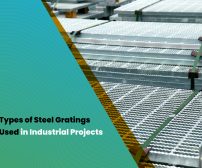
Industrial gratings come in a wide variety of styles and uses; therefore, different industrial gratings are crafted for specific applications in mind and for the style of operation. Take welded steel bar grate (WBG) for instance, which is a product designed for heavy industrial usage because of its high strength properties. Because of its strength it can regularly be found in many places including platforms, catwalks, trenched walkways, etc.
Another style of grate or plank safety grating with aggressive perforations to achieve multiple directions with a great degree of movement; these products are made for such applications as stairways, ladders and catwalks with a high propensities toward slips.
In corrosive or chemical environments, FRP/GRP gratings deliver excellent corrosion resistance, low maintenance, and very high slip resistance when gritted, making them ideal for chemical plants and water treatment facilities. Globally, steel grating demand continues to grow, with the market projected to rise from about USD 187–219 billion in 2024 to nearly USD 249–308 billion by early 2030s, driven largely by industrial applications. This trend is mirrored in India, where Industrial Metal Grating Manufacturer In India are increasingly supplying customized solutions for sectors like oil and gas, power, and chemicals.
Practical Design and Selection Tips
To determine what type of custom grating is appropriate for your project, it is important to consider the amount of load that will be applied, the type of environment, and how much traffic the grating will experience. This starts with engineers determining what is meant by “uniform live loads,” “point loads,” and “impact conditions,” and then designing the grating for those loads by choosing the appropriate bar depth, spacing, and support spans in accordance with ANSI load classes (light duty, medium duty, heavy duty, and extra heavy duty). In an area where there is a high level of contamination, it is very important to use either serrated or grip-style surfaces using slip-resistance data to ensure that they will remain safe for as long as they are used.
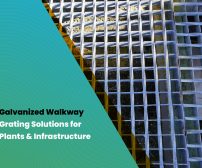
Another consideration when designing custom grating is corrosion protection; some types of custom grating (e.g., hot-dipped galvanized steel) are best suited for outdoor or industrial applications, while others (e.g., stainless steel) are designed for aggressive or hygienic environments, and others (e.g., fiberglass reinforced plastic (FRP) / glass reinforced plastic (GRP)) are best used when chemical exposure and minimal maintenance are top priorities. You can ensure you receive the layout, detailing, and coating selections that are specifically tailored to suit the conditions and regulations in your area by partnering with a local manufacturer of grating, such as manufacturers in Vadodara or Ankleshwar, that has experience providing grating products to meet the local requirements.
Installation, Maintenance, and Long-Term Performance
Effective installation is critical when it comes to grating. Grating manufacturers must first conduct a Safety Audit and Workflow Review of the area before specifying the best grating layout(s) to conform with the area’s existing conditions.
When installing grating, it’s necessary to ensure that the grating panels are correctly aligned, properly supported with steel clips or bolted anchors, and finished with properly banded edges. Proper installation of these components will help to prevent the occurrence of vibrations, movement, and unexpected gaps between grating panels.
Once actively in service, grating must be maintained regularly through visual inspections and routine cleanings. Regular cleaning will keep grating surfaces clean, free from oils and other contaminants, and in a slip-resistant condition. Routine visual inspections of grating surfaces will enable operators to identify loose fasteners and/or corrosion issues to conduct timely repairs and avoid interruptions to plant operations in high-volume operations and material handling areas.
Conclusion
Custom metal gratings turn basic walkways and platforms into engineered safety and productivity systems, combining slip-resistant surfaces, drainage, and optimized layouts that reflect real plant conditions. By collaborating with capable Industrial Metal Gratings Manufacturer In India—including specialized grating manufacturers in Vadodara and Ankleshwar—industrial operators can cut accident risk, streamline access, and support long-term, efficient workflows across their facilities.
Earth Tech Engineering is a dedicated industrial grating solutions provider offering customized metal platforms, walkways, and trench covers engineered for Indian industry needs. With a focus on proper design, safe installation, and durable finishes, Earth Tech Engineering helps plants upgrade safety, improve operational efficiency, and future-proof workflow infrastructure with application-ready grating systems.
Frequently Asked Questions
How do custom metal gratings improve safety compared to plain flooring?
They use slip-resistant profiles and open grids that drain liquids and debris, significantly lowering slip and fall risk in wet or oily areas.
Which type of industrial grating is best for chemical plants?
FRP/GRP or coated steel gratings with high corrosion and slip resistance are typically preferred in chemical and wastewater environments.
Can customized grating layouts really improve workflow?
Yes. Tailored platforms and walkways shorten routes, remove detours, and give direct access to equipment, which speeds daily operations and maintenance.
How often should industrial gratings be inspected?
At minimum, inspect during routine safety checks or shutdowns, focusing on slip resistance, corrosion, and attachment integrity in high-traffic zones.
Why work with local grating manufacturers in Vadodara or Ankleshwar?
Local experts understand regional industries and conditions, making it easier to get accurate customization, faster delivery, and on-ground support.