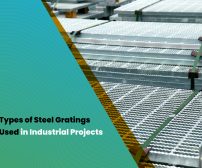



The steel grating has been an integral part of industrial infrastructure; the industrial sector utilizes them to create elevated areas where workers can safely walk throughout work areas. In addition to these locations, the steel grate is used in many other industries, such as construction, oil and gas, manufacturers and warehousing facilities; as India becomes an emerging global leader in producing this product; the state of Gujarat is home to a strong network of manufacturers that will produce and supply the highest quality products available worldwide to meet the growing need for quality steel gratings within both domestic and foreign markets.
What are Steel Gratings and Their Uses?
Steel gratings are constructed using large load-bearing bars and small cross rods; these bars and rods are assembled into open grid panels that are perfect for use in extremely heavy-duty environments. The most common forms of steel grating include welded gratings, which have been created using resistance welding techniques to join the bars and rods together, creating an extremely heavy-duty product; press-lock gratings that have been manufactured using hydraulic pressure to create interlocking bars without any visible welds; and swaged gratings, which have been manufactured by using cross rods that have been twisted or swaged during fabrication to provide additional stability to the product. Steel gratings can be manufactured using many different types of steel, and depending on the product specifications, steel gratings can be manufactured using mild steel, stainless steel, or galvanized steel.
Steel gratings are used in many different applications; for example, steel gratings are commonly used as industrial flooring in refineries, safety platforms in shipyards, drainage covers in waste treatment facilities, and pedestrian walkways located in urban infrastructure projects. The proper selection of grate types for specific applications ensures compliance with load-bearing requirements and provides optimization of ventilation and slip resistance.
Step-By-Step Summary of the Grating Manufacturing Process
Grating manufacturing process begins with selecting the best raw material: high-quality mild steel, stainless steel, or galvanized steel (pick the appropriate type based on the project requirements); then, using automated saws, the bars and cross rods are cut to exact dimensions such that they will be consistent in size and shape and allow for proper structural integrity of the product.
The core of all steel gratings is the fabrication process, which is based on the welding process. The cross rods are attached to the load bars via high-resistance electric welding machines that operate at temperatures over 1000 degrees centigrade to form welds that will not break; or by using hydraulic pressure (up to 1000 tons) to apply tremendous pressure on the cross rods together with the load bars to produce seamless interlocked bars. After this operation, the panels will then be straightened in hydraulic presses, followed by cutting them to size in CNC machines.
Next is the surface treatment of each panel, which is most often accomplished through hot-dip galvanization, which consists of immersing steel grates into molten zinc at temperatures of 450 degrees centigrade. The surface treatment of the product will produce a zinc coating that will provide the product with up to 20 to 30 years of protection from corrosion.
The last step of the manufacturing process is to carry out a final quality inspection to ensure that the dimensions are correct, the welds are formed with sufficient weld strength, and the thickness of the zinc coating is adequate; the product is then packed and shipped to ensure delivery without defects.
Quality Standards and Testing in Steel Grating Fabrication
There are specific quality standards and testing methods that all grating manufacturers must adhere to; these include ISO 9001—Quality Management Systems and ISI Certification (IS 1789)—for Mild Steel Gratings. By adhering to consistent standards of quality, manufacturers ensure the performance of their products.
In addition to these quality control standards, many manufacturers perform load testing of their gratings. Load testing is a method of simulating stresses placed on the grating in the real world; e.g., the load testing for a mid-sized industrial facility may be completed at 5-10 times the design load of the grating.
Many manufacturers will perform corrosion testing using salt spray units, which confirm that their galvanization will perform as advertised.
By validating critical measurements through laser measurement equipment and by performing non-destructive ultrasonic inspections of welds, manufacturers can ensure that gratings are made reliably, thus reducing the downtime and maintenance costs for end-users.
Why Gujarat Leads as a Hub for Grating Manufacturing
Gujarat has many advantages that support the manufacture of gratings. These advantages include globally competitive industrial parks in Ahmedabad, Vadodara, and Gandhinagar and a highly skilled labor pool with experience in advanced fabrication technologies. The close proximity to the ports of Kandla and Mundra means that grating manufacturer in Gujarat can also export their products quickly, making them competitive on the world market.
Gujarat’s state government incentives to fix micro, small and medium enterprise (MSME) and abundant source raw materials are enabling many companies to implement Industry 4.0 innovations like robotic welding technology, which has reduced their manufacturing cycle time by approximately 30% while also increasing manufacturing accuracy.
How to Choose the Right Grating Manufacturer in India
To select an appropriate grating manufacturer in India, ensure that you confirm the manufacturer is ISO-certified (ISO 9001, 14001, etc.) and that the manufacturer has its own lab, capable of performing all laboratory tests on each material used in the manufacture of gratings.
It is best to select a grating manufacturer that can provide you with the ability to customize products, including having a serrated surface to create an anti-slip surface or a custom-sized panel that is 3m x 6m in dimensions.
Confirm that the manufacturer complies with internationally recognized standards such as ASTM and BS before making your purchase. Leading Indian grating manufacturers are able to provide excellent after-sales support, including installation assistance and the ability to ship products anywhere in the country quickly.
| Factor | What to Check | Why It Matters |
| Certifications | ISO, ISI, ASTM | Ensures durability and safety compliance |
| Customization | Panel sizes, finishes | Matches specific project needs |
| Capacity | Production volume | Guarantees on-time delivery for large orders |
| Location | Gujarat/India hubs | Reduces logistics costs and lead times |
Leading Applications of Steel Gratings Across Industries
The various applications of steel gratings within the various industries are a testament to the effectiveness of steel gratings in providing functional and safe access to facilities such as oil and gas platforms, marine and shipbuilding industries, waste treatment plants, and civil engineering structures such as bridges or subway systems due to their high load-bearing capacity.
A grating manufacturer in Gujarat and India can provide customized steel grating solutions that not only meet the rigors of extreme weather conditions but also maximize lifecycle costs.
Conclusion
Ultimately, mastering the steel grating manufacturing process results in durable, high-performance steel gratings necessary to support today’s rapidly changing and growing infrastructure. Gujarat’s grating manufacturers have been at the forefront of innovation in the fabrication of steel gratings, establishing the standard of quality for all of India.
For all of your high-quality steel grating needs, please speak with Earth Tech Engineering Works, the leading manufacturer of turnkey steel grating customizations in Gujarat and India; contact us to request a quote on the creation of a custom steel grating product that suits your needs.
Frequently Asked Questions (FAQs)
Q1. What materials are commonly used in steel grating fabrication?
Mild steel, stainless steel (grades 304/316), and galvanized steel dominate, selected for strength, corrosion resistance, and cost-effectiveness.
Q2. How does the grating manufacturing process ensure durability?
Through precision welding/locking, hot-dip galvanization, and rigorous load/corrosion testing at every stage.
Q3. What quality checks should I consider when selecting a grating manufacturer?
ISO/ISI certifications, weld inspections, dimensional accuracy, and surface treatment thickness verification.
Q4. Why is Gujarat a leading region for grating manufacturing in India?
Industrial infrastructure, skilled labor, port access, and government support drive efficiency and exports.
Q5. Can Indian grating manufacturers provide customized solutions for international projects?
Yes, with CNC cutting, custom finishes, and compliance to global standards like ASTM for seamless integration.