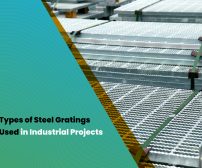



The use of stainless steel gratings for automated facilities has been a growing demand due to their combination of both being corrosion resistant and having the capability of being integrated with IoT technology. Consequently, Facility managers, as well as engineers, are currently being faced with increased pressure to prepare their facilities for the future by creating facilities that will withstand future increases in energy costs and safety regulations.
With that said, this guide will provide an overview of the anticipated changes to Stainless Steel Gratings in 2026, including market information about how to choose the proper grating solutions from grating manufacturers in Vadodara or from a reliable Industrial Metal Gratings Manufacturer in India to receive the maximum Return on Investment (looking for lowest downtime and highest efficiency) out of their investments in these types of products.
Explosive Market Growth Driving Stainless Steel Gratings Adoption
In 2024, the Global Stainless Steel Gratings Market will reach $1.5 billion and is projected to grow at a CAGR of 7.5% through 2033 as a result of the growth and expanding use of Industry 4.0 technology and the growing number of infrastructure projects being developed worldwide. The Asia-Pacific region is expected to make up 66% of the total market share for the Stainless Steel Gratings market. With the rapid and increasing volumes of manufacturing in India due to the “Make in India” initiatives, the demand for high-performance flooring and frangible flooring products for petrochemicals, pharmaceuticals, and renewable energy sources is at an all-time high.
The Advantages of Using Stainless Steel Gratings vs. Mild Steel Gratings is Due to Their Higher Durability, Longer Lifetime in Corrosive Environments Such as Wastewater Treatment Facilities and Food Processing Plants, and the Fact That the SS304 Grade of Stainless Steel Provides Cost-effective Versatility. Also, SS316 provides greater protection against Marine and Chemical Exposures Than SS304 because of its molybdenum-enhanced resistance to Corrosion.
Many grating manufacturers in Vadodara have capitalized on the state’s status as an industrial hub and have reduced their logistics costs by using the reliable local supply chain to meet their increased demand for these types of products.
Smart technology updates are revolutionizing the grating design for industrial flooring
Stainless steel gratings have moved from being a simple passive floor to an active smart grating system with integrated IoT sensors that constantly monitor load distribution, strain, vibration, and other environmental variables. The integration of these sensors allows for predictive maintenance reducing unplanned downtime from 25% to 40% for building owners and operators. Cloud-based dashboards give building operators access to real-time alerts and can integrate with Building Information Modeling (BIM) software, which is already used in approximately 15-20% of all modern construction projects.
Tubular spot weld designs provide a way to locate strain gauge and temperature sensors without affecting the structural integrity of the grating and can expect to last more than 30 years in service. This design innovation is representative of the principles of Industry 4.0, where gratings provide support for robotic pathways and automated material handling systems.
Characteristics of Smart Technologies
- Responsiveness and Load Monitoring Devices (Strain/Load Gauge): These gauges identify microcracks before technical failures.
- Overloaded Areas and Dynamic Situations (Vibration Detection): These alerts notify of possible overload conditions within dynamic regions such as conveyor chains.
- Connectivity via Wireless IoT: This creates additional opportunities to integrate AI technology for optimum workflow design and monitoring.
- Retrofitting: Each retrofit has been specifically designed to allow for easy installation within pre-existing manufacturing plants as a modular plug-and-play solution.
Ongoing Sustainable Developments Impact Material Selection
By 2026, new guidelines stipulate that manufacturers of stainless steel gratings must use 50% or greater recycled materials in manufacturing, and the process must have a low-carbon footprint to reduce embodied carbon by 30% versus traditional manufacturing methods.When manufactured using this process, the panels are lightweight and pre-fabricated, which creates a 40% reduction in job site waste and also significantly reduces installation timeframes. The use of electrostatic-applied coats have a higher level of UV and chemical-resistant deterioration.
Serrated surfaces provide anti-slip properties and comply with all safety standards; custom mesh sizes can be designed to maximise drainage while providing a load capacity of up to 5kN/m². The Industrial Metal Grating Manufacturer (India) has been a pioneer during this transition by implementing AI-driven processes for quality control and defect-free production.
Why Partnering With An Indian Manufacturer Is Beneficial
If You Need SS304/SS316 Gratings Manufactured That Are Custom Designed For Your Specific Load-Bearing Capacity, Rapid Prototyping And Precision Engineering Can Provide You With A Fast Turnaround And On-Time Delivery. The Leading Manufacturer Of Industrial Metal Gratings, EarthTech Engineering Works, uses The Latest Technology To Fabricate Electroforged Gratings, Stair Treads, and Platforms, Complete With built-in sensor Housings.
We Provide Comprehensive Project Management, Including Design (CAD) And Material Certification, Installation, And After-Sales Support, To The Petrochemical, Energy And Renewable Energy Markets Across India. Our Facility In Gujarat Allows Us To Shorten Project Lead Times And Incorporate ISO 9001 Certified Manufacturing Processes To Ensure Our Products Will Be Capable Of Withstanding Extreme Environmental Conditions.
Conslusion
Looking forward, Stainless Steel Gratings Will Revolutionise The Future Of Industry By Integrating IoT Technology, Superior Durability, and Sustainable Innovation Into An Industry That Is Projected To Grow At A Compound Annual Growth Rate (CAGR) of 7.5% from 2023-26. Therefore, It Is In The Best Interest Of The Forward-Thinking Engineer To Modernise By Finding A Grating Manufacturer Based In Vadodara Or A Manufacturer Of Industrial Metal Gratings Located In India. Receive An Estimate For The Custom Products You Need To Create A More Efficient Future For Your Operations.
For Over 20 Years, We Have Provided Heavy-Duty Solutions For Our Customers. We Can Provide Stainless Steel Gratings, Platforms, and Material Handling Equipment Specifically Engineered For Smart Factory Applications. Our Panels Are Fabricated Using SS304 and SS316 Stainless Steel, Featuring Integrated Sensors, Precision Automated Welding, And Comprehensive Support That Will Allow The Mumbai industry To Operate With Reliable, High-Quality Infrastructure.
Frequently Asked Questions (FAQs)
Q: Why are stainless steel gratings the top pick for 2026 smart industrial facilities?
A: Their corrosion-proof alloys and IoT sensor compatibility enable real-time monitoring and extended lifespans in demanding environments.
Q: How do grating manufacturers in Vadodara streamline custom orders?
A: They offer engineering consultations, fast prototyping, and local logistics for quicker, cost-effective project execution.
Q: What ROI can facilities expect from smart stainless steel gratings?
A: Up to 40% downtime reduction, 20-30% lifespan extension, and lower maintenance via predictive tech.
Q: Do stainless steel gratings comply with 2026 sustainability standards?
A: Absolutely—recycled content, low-carbon processes, and durable designs meet green building certifications.
Q: What qualifies a top Industrial Metal Gratings Manufacturer in India?
A: ISO certification, custom sensor integration, large-scale production capacity, and regional expertise like Vadodara hubs.