


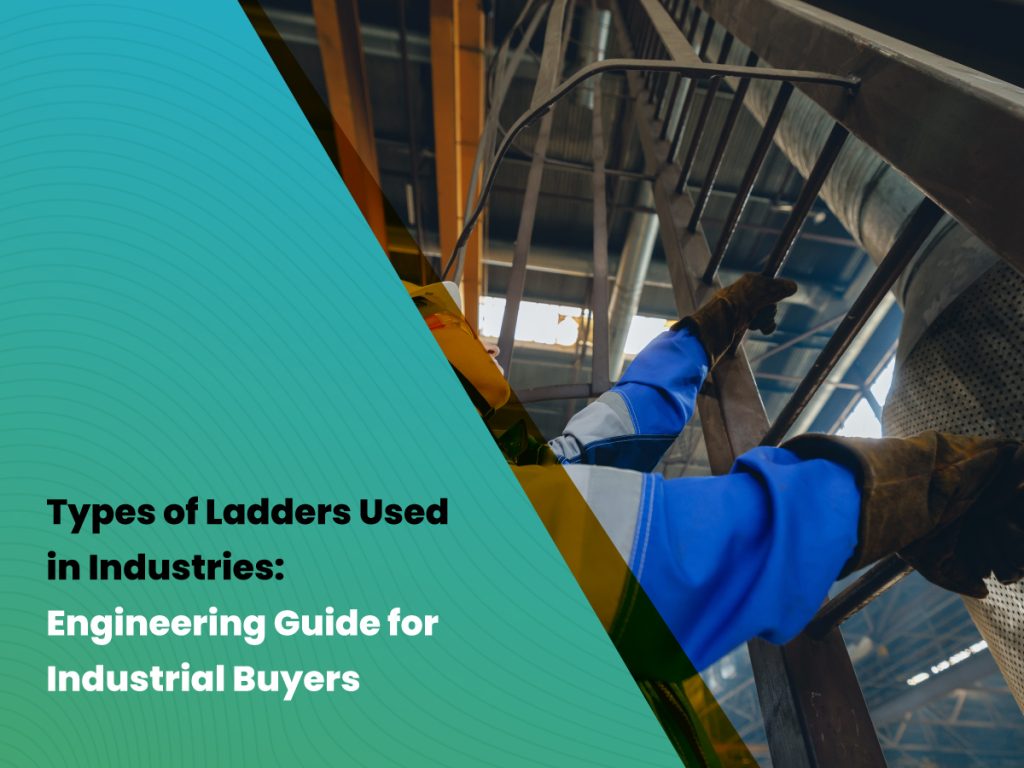
Types of Ladders Used in Industries
In industrial settings, ladders are designed to be used as a means of safe and efficient vertical access. They are made from steel or other structural materials to provide a safe means of access to multiple areas of a factory, warehouse, refinery, power plant or other industrial structure. Industrial ladders must be designed to withstand the high loads of both the worker(s) and the tools and maintenance equipment used to support them, and must be built according to industry safety standards.
Why Industrial Ladders Are Different from Domestic Ladders
Industrial access systems differ significantly from access systems used in residential or commercial applications. First, the demands placed on industrial ladders in industrial facilities differ greatly from the portability and convenience features most often associated with domestic ladders. Below are some key comparisons between industrial ladder and domestic ladder construction.
Load Capacity:
Load Capacity is typically much greater (hundreds of kilograms) than load capacities associated with domestic ladders (most commonly rated for a small amount of weight).
Durability:
Industrial Grade Ladders are designed for continual and repeated usage in extremely hazardous conditions, such as exposure to dust, oil, vibration, and heat, and are built using extremely heavy-duty steel. Domestic Grade Ladders are not designed for continuous use and exposure to extreme conditions.
Material Strength:
Domestic Graded Ladders typically utilize lightweight aluminum in their construction. Industrial Access Systems utilizes various grades of mild steel, hot-dipped galvanized steel, stainless steel, or other structural materials to provide the necessary strength to steel ladders.
Corrosion Protection:
Long-term corrosion protection of Industrial Ladder Systems is achieved through the use of powder coating, hot dip galvanizing, or epoxy coatings, thus providing long-term resistance to moisture, chemicals, and coastal exposure.
Safety Compliance:
As part of the overall design for plant safety, Industrial Ladder Systems include installation of guard rails, cages, platforms, toe boards and anti-slip rungs.
Major Types of Ladders Used in Industries
The following four pieces of equipment are primarily used for fixed vertical ladders, caged ladders, platform ladders, and heavy-duty step ladders.
1. Fixed Vertical Ladders
Where Used:
Storage tanks, silos, chimneys, overhead structures, and building exteriors.
Maximum Load:
Fixed vertical ladders are typically designed for a maximum live load of between 150 and 200 kilograms and are usually installed with structural anchoring.
Examples of Industries:
Chemical plants, cement plants, and steel mills.
Importance of Fabrication for Fixed Vertical Ladders:A fixed vertical ladder can fail structurally if it is not anchored properly or if the rungs have not been welded properly. The quality of fabrication of a fixed ladder affects its long-term safety.
2. Caged Ladders
Where Used:
Caged ladders are used in situations with heights that exceed the safe limit to climb a ladder or in cases where a person must work from a height that exceeds the safe limit, typically the height of the ladder exceeds 3-4 meters.
Maximum Load:
Similar to a fixed ladder, the live load of a caged ladder is the same as a fixed ladder assuming that the fall protection cage is attached to the ladder.
Examples of Industries:
Caged ladders are used in many industries, including: Refineries, power generation plants, and water treatment plants.
Importance of Fabrication for Caged Ladders:
Caged ladders must be fabricated in an exact way. When fabricating a caged ladder, it is important to ensure that the cage is properly aligned, that there are adequate vertical and horizontal spacings between cages, and that all structural bracing is properly aligned.
3. Platform Ladders
Where Used:
Maintenance zones where a stable standing platform is necessary.
Maximum Load:
A platform ladder is typically designed to hold a static load of up to 250 kilograms depending on the design of the platform ladder.
Examples of Industries:
Platform ladders are widely used in the following industries: Assembly units, packaging plants, and food processing plants.
Importance of Quality of Fabrication for Platform Ladders:
A platform ladder must be designed and fabricated with sufficient stability and strength to support repetitive use in an industrial work environment. Guardrails must also be designed and fabricated to withstand repetitive use in an industrial work environment.
4. Heavy Duty Step Ladders
Where Used:
Heavy-duty step ladders are used in indoor plant operations as well as electrical maintenance.
Maximum Load:
The maximum load of a Heavy Duty Step Ladder is between 150 and 200 kilograms depending on the structural grade of the ladder.
Examples of Industries:
Heavy Duty Step Ladders are widely used in Manufacturing Units and Warehouses.
Fabrication Considerations for Heavy-Duty Step Ladders:
Heavy-duty step ladders must be fabricated with reinforced joints and Industrial Grade Anti-Skid Steps to ensure that the ladder is safe for use.
5. Extension Ladders
Where Used:Temporary work at various heights.
Maximum Load:
Varies by Length and Materials used.
Examples of Industries:
Utility Maintenance and Infrastructure Projects.
Fabrication Considerations for Extension Ladders:
Reliability of locking mechanisms and structural stiffness.
6. Rolling Ladders
Where Used:Logistics Warehouse/Goods Storehouses
Maximum Load:200-300 kg.
Examples of Industries:
Distribution Centres and E-commerce Warehouses.
Fabrication Considerations for Rolling Ladders:
Wheel Locking System and Platform Stabilization.
7. Mezzanine Access Ladders
Where Used:
Mezzanines for Industrial Storage and Elevated Platforms
Maximum Load:
Depends on the Structural Design of the Mezzanine
Examples of Industries:
Pharmaceutical Warehouse/Plant and Automobile Plant
Fabrication Considerations for Mezzanine Access Ladders:
Precision of Construction to Mezzanine’s Structural Steel and Floor Distributions.
8. Custom Fabricated Ladders
Where Used:
Process Plants with Space Limitations
Maximum Load:
Calculated by Project Requirements
Examples of Industries:
Oil and Gas, Heavy Engineering/EPC Projects.
Why Customization Is Crucial:
Custom Fabrication is Critical to Guarantee Structural Compatibility and Operational Safety Due to the Rare Application of Standard Ladders to Industrial Layouts.
Material Selection in Industrial Ladder Manufacturing
Mild steel:
Mild steel is one of the lower-cost options that provides structural performance. However, a surface treatment of a coating is required to ensure a good protective barrier.
Galvanized steel:
Galvanized steel is often the preferred product for outdoor applications as it creates a more durable option for corrosion protection throughout the lifetime of a ladder.
Stainless steel:
Stainless steel is used primarily in the food and pharmaceutical industries where a high level of corrosion resistance and hygiene are required.
Anti-Slip Features:
Anti-slip ladders are equipped with the latest technology, which includes patterned plates, serrated grates or rung surfaces, and textured rungs.
Surface Treatment:
All anti-slip ladders are treated prior to shipment with a powder coating, epoxy paint, or galvanized finish to provide maximum product longevity.
Safety & Compliance Considerations in India
– Slip resistance testing in oil-prone environments is required
– Guardrails and safety cages are required for height protection
– All ladders must be designed and manufactured to withstand environmental exposure (humidity, heat, chemicals).
All ladders must provide easy and safe access to connected platforms and walkways. With many industrial plants located in high-temperature or coastal areas, all ladders must be manufactured with corrosion resistance and structural durability.
Why Work with Industrial Ladders Manufacturers Instead of Traders
When you partner directly with an industrial ladder manufacturer, you have access to the following items that are not available through a trading relationship:
– Custom sizing based upon your plant’s layout
– On-site measurement assistance
– Structural calculations related to the load-bearing and/or support systems
– Fabrication quality control
– Assurance of ample long-term durability.
Traders are selling you their catalog of products. Manufacturers are delivering you engineered solutions designed to meet your plant’s needs.
Role of Engineering Fabrication Work in Ladder Projects
Industrial Ladders are rarely used independently of other components of a system. Engineering fabrication work connects your ladder system to your other systems, for example:
– Structural Steel Framework
– Maintenance Platforms
– Walkways/Handrails
– Equipment Support Systems
in order to provide equal alignment, sufficiency of strength, and maximum safety.
Why Earth Tech Engineering
Earth Tech Engineering is an industrial ladders manufacturer based in Gujarat who creates durable steel ladders and offers complete industrial access solutions. Earth Tech Engineering provides support to EPC Contractors, Plant Managers, and Industrial Consultants with their custom ladder systems, fixed and platform ladders, structural steel integration, corrosion-resistant fabrication, and project-based manufacturing. Earth Tech Engineering uses its extensive knowledge of the industry and the engineering fabrication process to provide you with what you need to be successful in your industrial ladder project.
Frequently Asked Questions
Q1. What type of ladder is best for industrial use?
Fixed vertical or platform ladders are commonly used in industrial settings due to higher load capacity and structural stability.
Q2. What is the load capacity of industrial ladders?
Most industrial ladders are designed to handle 150–300 kg depending on structural design and application.
Q3. Are industrial ladders galvanized?
Yes. Galvanized steel is widely used for outdoor industrial installations to prevent corrosion.
Q4. What material is used in industrial ladder fabrication?
Mild steel, galvanized steel, and stainless steel are commonly used based on environment and application.
Q5. How do you choose an industrial ladder manufacturer?
Select manufacturers offering custom sizing, structural calculations, quality fabrication, and on-site technical support.
Q6. Can ladders be customized for plant layouts?
Yes. Industrial ladders are frequently custom-fabricated to match plant dimensions, equipment placement, and safety requirements.