


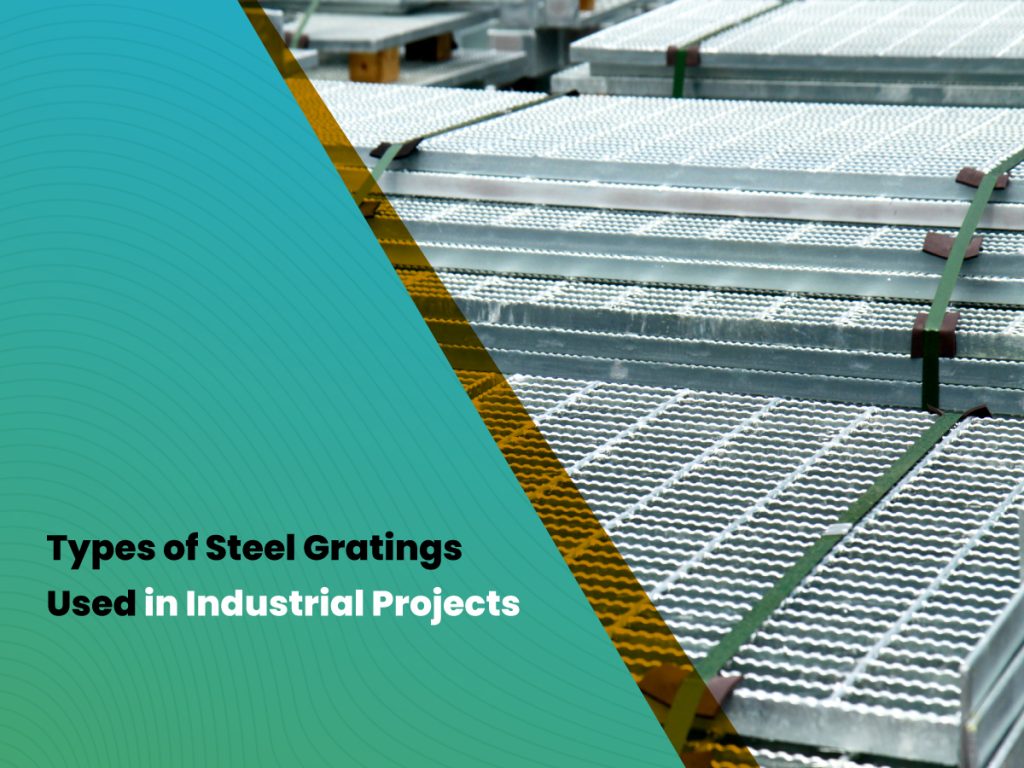
Modern industrial structure relies on steel gratings. They give users an extremely durable product and create a stable surface to walk upon when exposing workers to constant stress in their daily jobs. A grating is often designed with an open grid system to allow for the flow of water, oil, debris, or air while still providing maximum strength and stability.
Due to these benefits, steel gratings can be found in factories, power plants, refineries, warehouses, and processing plants all over the world. They can be used for walkways, staircases, and drains, as well as other areas of Industrial Operations and Maintenance with a focus on safety and efficiency. When it comes to helping engineers, contractors, and procurement teams identify the proper type of Steel Grating for the specific needs of their clients, their knowledge of different types will be beneficial.
Types of Steel Gratings During Industrial Projects
Steel Grating Systems must be able to handle extremely high loads, and also must have a long service life by being corrosion resistant, and be able to support continual operational stresses, if they are manufactured of materials that allow these two properties. Galvanized Steel, as well as Stainless Steel, will be two of the most popular choices when it comes to manufacturing Industrial Grating Systems.
Galvanized Steel Gratings
Steel Grating that has been galvanized is one of the most popular types of Grating used in an Industrial Environment as a result of this material’s Strength and high resistance to Corrosion. Galvanized steel gratings are made from Carbon Steel, which then undergoes a hot-dip galvanization process to receive a thin, protective layer of Zinc.
Through the hot-dip galvanization process, the Steel will become part of the protective coating, or layer, that has formed from the application of molten Zinc to the Steel surface, which occurs when the Steel is completely submerged in the Molten Zinc to create a new Zinc-Coated layer. This layer provides the protective barrier against rust, moisture and other chemicals or environmental factors.
Because of the protective coating, galvanized Steel Grating is an ideal material for outdoor industrial applications.
The Most Notable Advantages:
- Galvanized Steel Grating offers the strongest Weight-Carrying Capability of any Grating product available today.
- This offers an Exceptional Degree of Corrosion Protection.
- Galvanized Steel Grating has a longer Life Span when used in an Industrial Environment.
- Galvanized Steel Grating has very Little Maintenance.
- Cost-wise, Galvanized Steel Grating is Economical for large industrial applications.
Common Industrial Uses:
- Industrial Stairways and Walkways
- Refineries and Chemical Processing Plants
- Power Generation Plants and Manufacturing Facilities
- Water Treatment Plants
- Drainage and Trench Covers
With the extended Life, Durability, and Cost-Effectiveness of galvanized gratings, Engineers look to Manufacturers of Industrial Gratings for Infrastructure Design and-product.
Stainless Steel Gratings
The design of stainless steel grating systems is intended to provide excellent corrosion resistance and hygiene. The stainless steel products are usually made of stainless steel grade materials (usually either SSA304 or SSA316) with chromium content, which provides a natural protective barrier against corrosion.
Unlike galvanized steel products, which need to be coated, stainless steel does not have a coating; instead, the chemical composition of the stainless steel gives it long-lasting resistance to the elements (e.g., rust), to chemical substances and to harsh industrial environments.
Benefits of Stainless Steel Grating:
- Outstanding corrosion protection
- Exceptional durability in the chemical industry
- Ease of cleaning and maintenance (hygienic)
- Used for extreme industrial environments
- Strong structural support that lasts for years
Stainless Steel Grating Is Commonly Used In:
- Food Processing
- Pharmaceuticals
- Chemical Industry
- Offshore/Military Vessels
- Waste Water Treatment Facilities
Due to the industrial environments for which stainless steel grating products are frequently designed, the need for dependability and cleanliness is of utmost importance in these types of environments.
Galvanized vs Stainless Steel Gratings
Selecting the right material depends on the operating environment, project budget, and maintenance expectations.
| Feature | Galvanized Steel Grating | Stainless Steel Grating |
| Corrosion Resistance | High due to zinc coating | Very high due to alloy composition |
| Strength | Excellent load capacity | Excellent load capacity |
| Cost | More economical | Higher initial cost |
| Maintenance | Low maintenance | Very low maintenance |
| Industrial Applications | Walkways, platforms, drainage covers | Chemical plants, marine environments, food processing |
Both materials provide reliable performance in industrial settings, but the final choice depends on the specific application and environmental conditions.
Applications of Steel Gratings in Industrial Projects
Metal gratings, or steel, are utilized extensively in many different sectors of business due to their combination of strength, ventilation, and safety.
Walkways and Access Roads
Metal grating (steel grating) is a common material used for walkways in factories and plants to provide a safe walking surface for employees while providing an outlet for liquids and solid materials via drainage through the grating.
Industrial Platforms
Industrial platforms in power plants, refineries, and production facilities typically have heavy-duty metal grating installed to allow for a safe way for people to access elevated equipment and machines.
Drainage Systems
Trench covers and drainage systems are typically made from metal grating (steel). The open structure of the metal grating allows water to pass through the metal grating easily, while providing the necessary strength and support for the load placed upon the metal grating.
Processing Plants
Industrial facilities that process or transport oil and gas (e.g., gas processing plants, chemical processing facilities), as well as the manufacturing industry, rely on metal grating (steel) systems for flooring, equipment platforms, and maintenance walkways. In many of these instances, anti-slip metal grating (steel) is often utilized to enhance worker safety.
How to Choose the Right Steel Grating
To select the best grating, many different technical and environmental elements need to be evaluated.
Load Capacity
The selected grating must have sufficient load capacity for the anticipated loads placed on it by people working on it, machinery used in conjunction with it, and any operational equipment placed on or above it.
Environmental Conditions
Industrial installations occur in a wide variety of environments. Outdoor installations will need to use galvanized steel grating in order to withstand exposure to weather conditions, and installations in chemical and/or marine environments will need to utilize stainless steel for corrosion-resistant properties.
Corrosion Exposure
Industrial facilities that are subject to chemical exposure and/or high levels of moisture will need to use grating materials that have high corrosion-resistive capabilities, as will those located near the ocean.
Safety Requirements
Many industrial safety regulations state that the use of anti-slip steel grating is required to reduce accidents.
Project Size and Budget
Many times, when constructing large infrastructure projects, contractors will select galvanized steel grating because of its cost-effectiveness, while stainless steel grating must be used for specialized industrial environments requiring greater corrosion resistance.
Working with an industrial grating manufacturer will provide you with the correctly selected materials and designs to ensure the grating will provide successful long-term performance.
Why Many Industrial Projects Choose Earth Tech Engineering
The reliability of a grating system in an industrial application is not only determined by the material from which it is constructed, but also by the level of expertise possessed by the manufacturer. Steel grating should be designed to exacting specifications to guarantee that it will provide the required levels of strength, longevity, and support required by the users of these products in the harsh and extreme environments of industrial applications.
Earth Tech Engineering is an Industrial Steel Grating Manufacturer in Gujarat and has built a solid reputation for providing industrial-grade steel grating that is durable and performance-oriented. We manufacture both Galvanized Steel and Stainless Steel Grating products, Anti-Slip Steel Grating, and custom-made metal grating solutions for walkways and industrial platforms used in a wide variety of manufacturing, plant, and facility applications.
With strong experience in the engineering sector, a commitment to superior quality manufacturing practices, and the confidence that comes from our long-standing relationships with the customers we serve. Earth Tech Engineering is able to provide companies with a high degree of confidence in the use of steel grating for their applications due to its ability to provide long-lasting, reliable, and economical industrial steel grating solutions.
Final Thoughts
The Steel Grating product is one of the most widely used components of industrial infrastructure materials. Steel Grating is commonly used for walkways, platforms, drainage systems, and Capital Projects, but is also a component of many types of industrial processes.
There are many different types of Steel Grating materials, such as Galvanized Steel and Stainless Steel, each with its own characteristics that affect their suitability for the application being considered. Understanding the advantages and disadvantages of the various steel grating types will assist the Engineer/Contractor to select the most appropriate steel grating solution to meet the load-bearing capacity of the steel grating system, the exposure to environmental elements, as well as the limitations of the project’s budget. Appropriately matching the best steel grating for an application and the best manufacturing company will assist you in achieving maximum performance, safety, and reliability over the life of the Industrial Grating product you choose.
Frequently Asked Questions
Q1. What are the most common steel grating types used in industries?
The most common steel grating types include galvanized steel gratings and stainless steel gratings. These are widely used for industrial walkways, platforms, drainage systems, and plant infrastructure.
Q2. Where are steel gratings used in industrial projects?
Steel gratings are commonly used in factories, power plants, oil and gas facilities, warehouses, and manufacturing units for walkways, industrial platforms, trench covers, and drainage systems.
Q3. What is the advantage of galvanized steel grating?
Galvanized steel grating provides excellent corrosion resistance, strong load capacity, and long service life, making it ideal for outdoor and heavy-duty industrial environments.
Q4. When should stainless steel grating be used?
Stainless steel grating is preferred in environments with high corrosion exposure, such as chemical plants, marine facilities, food processing industries, and pharmaceutical manufacturing.
Q5. How do I choose the right steel grating for my project?
The right grating should be selected based on load capacity, environmental conditions, corrosion exposure, safety requirements, and budget. Consulting with an experienced industrial grating manufacturer can help ensure the correct solution is chosen.