


Nobody Talks About Fabrication Until Something Goes Wrong
Here is a scenario most plant managers have lived through at least once.
A new production line is getting commissioned. Structural platforms are delayed because the fabricator misread the load specification. The installation crew is on-site, waiting. Every day of delay has a cost. The procurement team is fielding angry calls, and somewhere in the chain, someone approved a vendor without really understanding what quality fabrication looks like.
This is more common than it should be — and most of the time, it starts with a lack of clarity about what engineering fabrication actually involves, what the process looks like, and what separates a competent fabricator from one who will cause problems down the line.
This article is written to close that gap.
What is Engineering Fabrication?
At the most practical level, engineering fabrication is the process of taking raw material — a steel plate, a hollow section, an angle iron — and turning it into something that performs a specific structural or functional role in an industrial setting.
It is not mass production. A bolt manufacturer makes millions of the same bolt. A fabricator builds what the drawing says, in the quantity the project needs, with the material grade the application demands. The output could be a single equipment support frame or a complete multi-level access platform for a refinery unit.
What makes it “engineering” fabrication — rather than just general metalwork — is the involvement of proper design inputs: load calculations, applicable standards, dimensional tolerances, and material certifications. The word engineering here is doing real work. It means the output has been thought through, not just assembled.
The Fabrication Process, Step by Step
People often assume fabrication is mostly welding. Welding is important, but it is one part of a longer sequence. When any step in that sequence is rushed or skipped, the problems show up later — sometimes during installation, sometimes years into service.
Design and Drawing Review
Before any material is touched, someone needs to sit with the drawings and actually read them. That means checking the material callouts, understanding the load conditions, flagging dimensions that look inconsistent, and confirming that what is asked for can actually be built the way it is drawn. Experienced fabricators push back at this stage if something does not look right. Inexperienced ones just start cutting.
Material Procurement and Incoming Inspection
The right grade of material matters enormously. Using IS 2062 E250 where E350 is specified is not a minor substitution — it changes the structural behaviour of the component. Good fabricators procure from traceable sources, check mill test certificates, and physically inspect incoming material for surface defects, warping, or dimensional non-conformance before anything goes to the shop floor.
Cutting and Profiling
Depending on material thickness and geometry, cutting is done through plasma, laser, oxy-fuel, or mechanical methods. The goal is clean, accurate cuts with edges that will fit properly during assembly. Poor cuts create gaps at weld joints, which create weak welds, which create structural problems.
Forming and Bending
Flat cut pieces get their shape here — through press brakes, roll benders, or hydraulic forming. This step requires tooling that is properly maintained and operators who understand springback, material hardness, and minimum bend radii. Overbending and then trying to correct it by force is a common shortcut that damages material integrity.
Fit-Up and Assembly
Before welding begins, components are assembled and tacked into position. The quality of fit-up — how well the pieces align with each other — directly determines weld quality. Gaps that are too wide, misaligned joints, or components that are out of square at this stage will not be corrected by the weld. They get locked in.
Welding
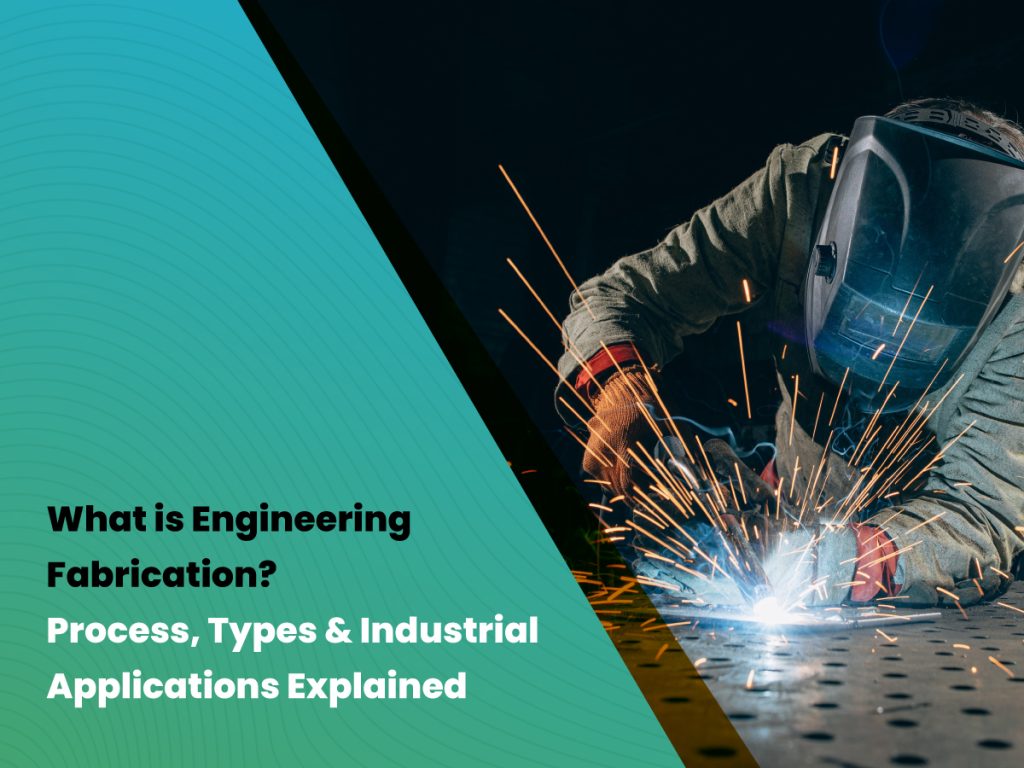
This is where most of the visible skill lives. The right welding process — MIG, TIG, SMAW, FCAW — depends on material type, joint configuration, and the service conditions the component will face. A handrail weld in a dry indoor facility has different requirements than a structural weld on a coastal chemical plant platform. Weld procedure specifications (WPS) should be documented and followed, not improvised.
Post-Weld Treatment, Grinding, and Machining
After welding, components are cleaned — spatter removed, weld profiles ground where needed, holes drilled to final dimension. For stainless steel work, particularly in food or pharmaceutical environments, post-weld passivation is part of the process, not optional.
Surface Treatment
Hot-dip galvanizing, powder coating, epoxy painting, shot blasting — the choice depends entirely on where the component is going and what it will be exposed to. A grating walkway on an outdoor platform in a coastal city needs a different surface treatment than the same grating inside a temperature-controlled warehouse. Getting this wrong means corrosion, maintenance costs, and early replacement.
Inspection and Handover
Final inspection checks dimensional accuracy against drawings, weld quality, surface finish, and any specific test requirements. For structural components, this should be documented. A quality record that travels with the component gives the buyer something to reference when questions come up during installation or future audits.
Types of Fabrication — And Why the Distinction Matters
Not all fabrication is the same. Different types require different equipment, different skills, and different quality systems.
Structural Fabrication deals with load-bearing assemblies — frames, columns, beams, platforms, and trusses. The dominant concerns are dimensional accuracy, weld integrity, and conformance to structural standards. This is the type of fabrication that builds the skeleton of a plant.
Sheet Metal Fabrication works with thinner gauge material to produce enclosures, panels, ducts, and covers. Precision in forming and joining matters more here than raw structural strength.
Pipe and Pressure Vessel Fabrication sits under its own regulatory regime. Pressure systems must be designed and fabricated to specific codes — IS 2825, ASME Section VIII — and require certified welders using qualified procedures. This is not an area where a general fabricator should be improvising.
Custom Industrial Product Fabrication is where products like metal gratings, industrial access ladders, handrails, trolleys, and pallets are built. These products must conform to specific load ratings, dimensional standards, and in some cases statutory safety requirements. Earth Tech Engineering’s engineering fabrication services cover this category extensively.
Precision Fabrication involves tighter tolerances, often combining welded assemblies with CNC-machined interfaces. Common in instrumentation supports, machinery components, and process equipment.
Fabrication vs Manufacturing — A Practical Distinction
Manufacturing, in the conventional sense, is about repeatability and volume. The process is designed around a fixed product that gets made thousands or millions of times. Tolerances are built into tooling. Human variability is minimised.
Fabrication is the opposite of that in several important ways. Every job may have a different drawing. Material quantities vary. Weld sequences change based on geometry. Surface treatment changes based on the end environment. The fabricator’s workforce needs to be adaptable, not just repeatable.
In most industrial facilities, both exist side by side. Manufactured components — motors, pumps, fasteners — are purchased off the shelf. Everything that supports, houses, connects, or provides access to those components is typically fabricated. One cannot function without the other.
Where Fabrication Shows Up in Indian Industry
The range is wider than most buyers initially think.
In oil refineries and chemical plants, fabricated components include pipe supports, equipment skids, cable tray supports, access platforms, and safety barriers. In automobile plants, fabrication produces assembly line fixtures, material handling trolleys, component racks, and welding jigs. Power plants depend on fabricated walkway gratings, staircases, coal handling structures, and equipment foundations. Pharmaceutical and food processing facilities need stainless steel frameworks built to hygiene standards with specific surface finish requirements.
In each of these environments, the fabricated components are not decorative. They are structural, functional, and in many cases safety-critical. When they fail, people get hurt or production stops.
Choosing a Fabrication Partner — What Actually Matters
The lowest quote is rarely the right choice in fabrication. That is a lesson most procurement teams learn once, the hard way.
What actually matters: Does the fabricator have the right equipment for your job? Not a plasma cutter when you need laser cutting accuracy. Not a general welder when your application needs a procedure-qualified weld on stainless steel.
Do they understand materials? A fabricator who cannot explain why you need a particular steel grade for a particular load condition is operating on habit, not knowledge.
Is quality built into their process or bolted on at the end? The difference shows up in their documentation — do they have weld procedure specifications? Do they maintain dimensional records? Is their inspection independent of their production team?
What is their track record in your industry specifically? A fabricator experienced in heavy structural work may not understand the hygiene and surface finish requirements of a pharmaceutical facility. Experience in the right sector matters.
Key Takeaways
Engineering fabrication converts raw materials into custom industrial components through a defined process sequence. Each step — from drawing review to final inspection — carries quality implications that show up in the finished product’s performance and service life. Fabrication differs from manufacturing in its custom, project-specific nature. The types of fabrication vary significantly in their technical requirements and applicable standards. Choosing a fabrication partner based on capability and track record rather than price alone is the single most important procurement decision a plant team makes in this category.
Frequently Asked Questions
Q1. What is engineering fabrication in simple terms?
It is the process of building industrial structures and components from raw metal by cutting, shaping, welding, and finishing them to a specific design. Unlike standard manufactured products, fabricated items are built to a particular drawing or site requirement.
Q2. How is fabrication different from welding?
Welding is one operation within fabrication. The full fabrication process includes design review, material procurement, cutting, forming, fit-up, welding, grinding, surface treatment, and inspection. Welding joins the pieces; fabrication is the complete chain.
Q3. What materials are typically used?
Mild steel and stainless steel cover the majority of industrial fabrication. Aluminium is used where weight matters. Galvanized steel and alloy steels are chosen for specific corrosion or strength requirements. The right material depends on load, environment, and the applicable standard.
Q4. What standards apply to fabrication in India?
IS 800 covers general structural steel design. IS 2062 specifies structural steel grades. and IS 2825 applies to pressure vessels. For welding, IS 9595 and IS 7307 are relevant. International standards like ASME and EN apply where specified by the client or the end industry.
Q5. When do I need custom fabrication instead of a standard product?
When your dimensional, load, or environmental requirements fall outside what catalogue products offer — which happens frequently in plant and project environments — custom fabrication is the answer. It is also the only option when you are working to a specific engineering drawing.
Q6. How long does fabrication take?
Simple components can be ready within days of drawing approval. Complex assemblies — multi-level platforms, large skids, full staircase structures — typically take four to ten weeks depending on material availability, complexity, and surface treatment requirements.
Q7. What should I include in a fabrication enquiry?
Send the drawings with full dimensional and material callouts, the applicable standard if specified, quantity, required delivery schedule, and any specific inspection or testing requirements. The more complete your enquiry, the more accurate and comparable your quotations will be.
Talk to a Fabrication Team That Understands Industrial Requirements
Earth Tech Engineering works with project engineers, plant managers, and procurement teams across India on engineering fabrication requirements — from industrial access ladders and metal gratings to structural platforms and custom equipment supports.
Share your drawings and specifications with us. We will review them properly and come back with a detailed, technically grounded response — not a generic quote.