



























What is Fabrication?

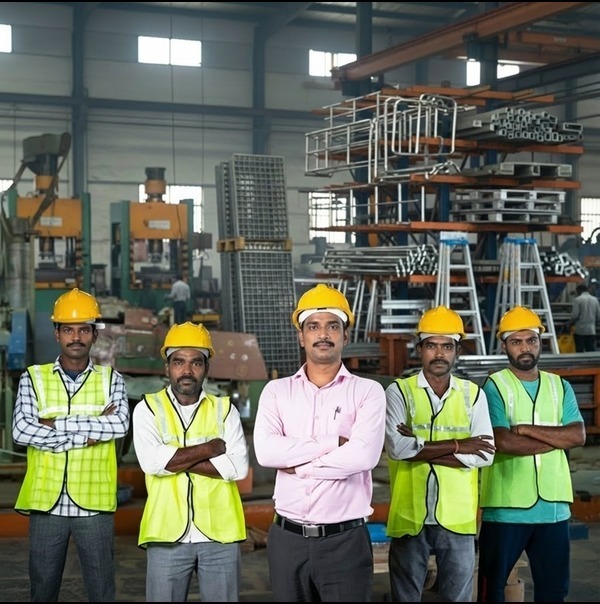
Walk into any steel fabrication shop and you will see the same thing — raw sections of steel coming in from one end and finished structural components going out from the other. That transformation in between is fabrication.

Simply put, fabrication is the process of converting raw metal stock into a finished industrial product through a series of controlled manufacturing operations. It is not one single process. It is a sequence of decisions — what to cut, how to join, what tolerance to hold — each one affecting the final quality and cost of whatever you are building.

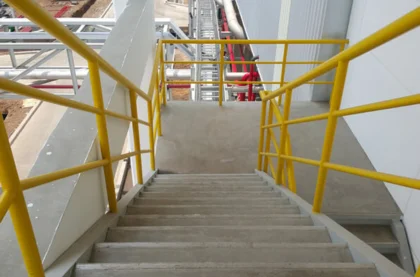
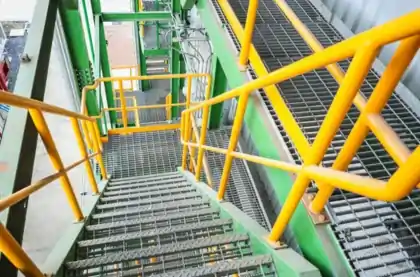
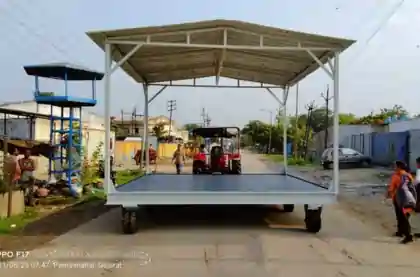
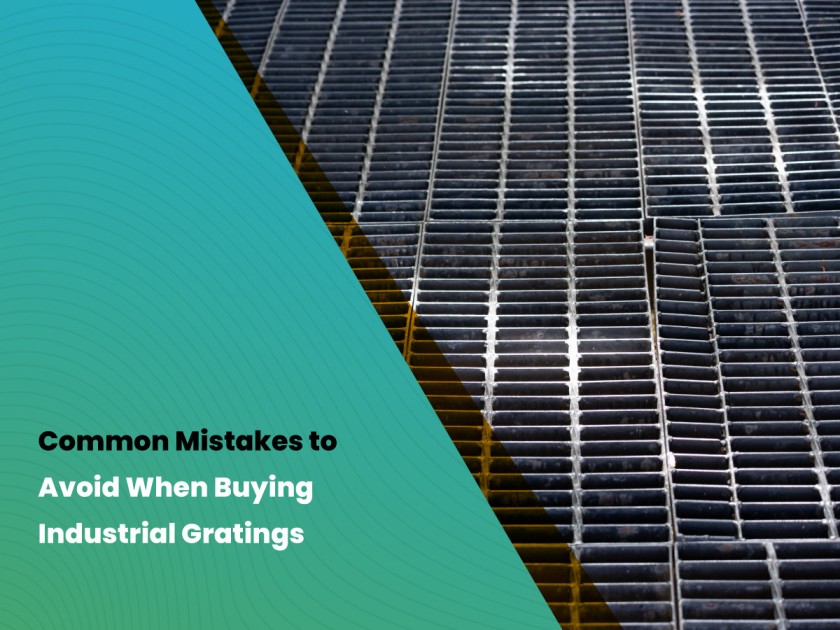
The scope is wide. A simple grating panel. A heavy-duty equipment skid. A multi-level mezzanine platform with integrated staircases. All of it goes through fabrication. The fabrication techniques used, and the order they are applied in, vary based on the product — but the five core processes remain the same across almost every heavy industrial application.

Why Fabrication Techniques Matter More Than Most People Realise

Here is something that does not get talked about enough in project discussions: the choice of fabrication technique is a design decision, not just a production decision. By the time drawings are issued and the purchase order lands on a fabricator’s desk, the technique is essentially locked in. If the wrong one was specified — or worse, if nobody specified one at all and left it to the fabricator to figure out — problems show up later. Usually on site. Usually at the worst possible time.

I have seen handrail sections crack at the bend because the designer never specified a minimum bend radius. Seen structural joints fail early because the weld process used was not appropriate for the material thickness. Seen machined shaft bores that were over-toleranced to the point of being impossible to assemble in field conditions.

None of those failures was a material problem. There were fabrication technique problems. And every one of them could have been avoided if the right conversation had happened earlier in the project.

For project engineers, plant managers, and procurement heads — understanding these five techniques gives you the language to have that conversation. That is the real value here.

The Top 5 Fabrication Techniques Used in Heavy Industries

1. Welding

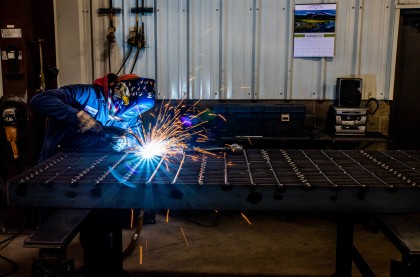
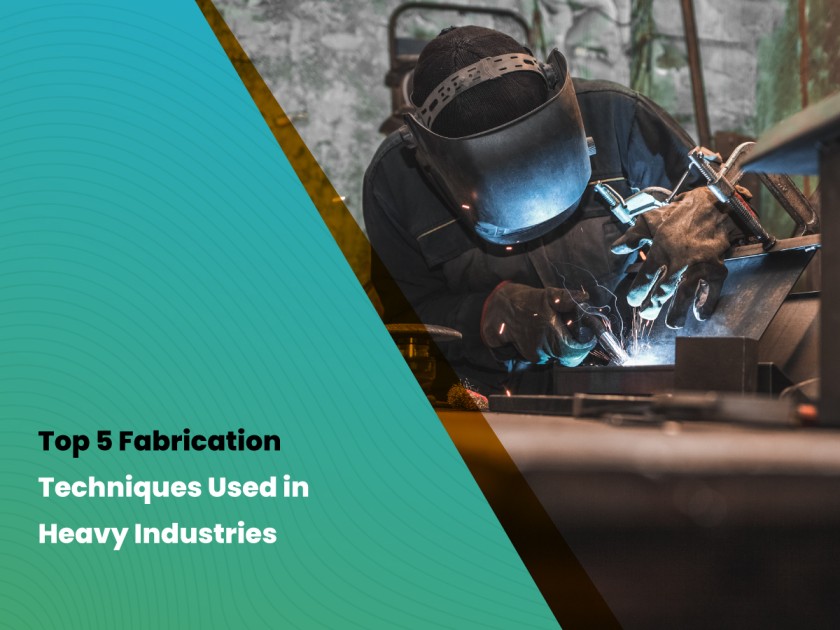
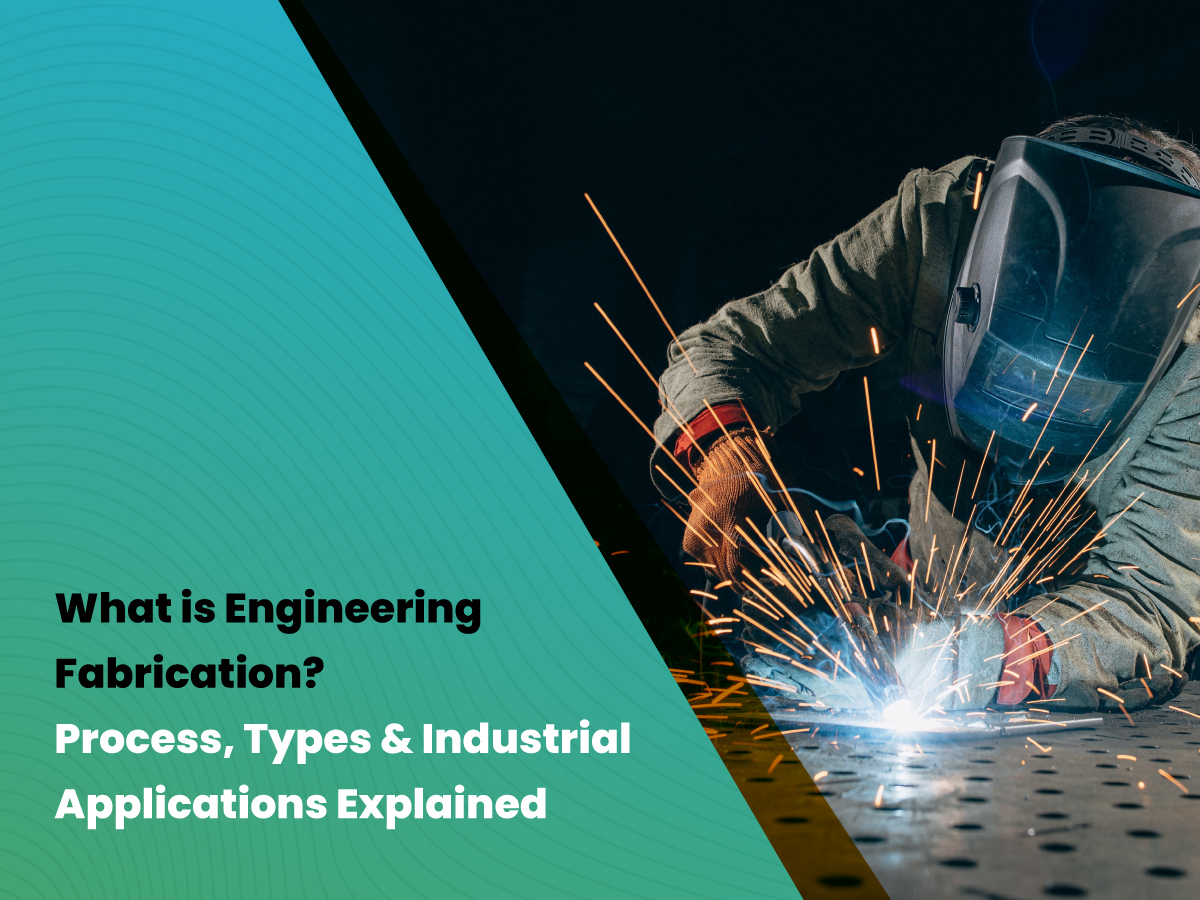
If you had to pick one fabrication technique that shows up on every single heavy industrial project without exception, it is welding. Structural frames, equipment skids, platforms, handrails, staircases, pallets, trolleys — all of them depend on welding for their primary load-carrying joints.

Welding uses heat, and sometimes pressure, to fuse two or more metal pieces into a single continuous structure. When the process is right for the material, and the joint is properly executed, the weld is as strong as the parent metal. When it is not, you get porosity, undercut, incomplete fusion, or heat-affected zone cracking. None of those is things you want to find during an inspection or, worse, after a failure.

The process you choose within welding matters enormously:

MIG welding is the production workhorse. It is fast, it works well on mild steel and medium sections, and it is the default process in most fabrication shops for structural work. Used heavily in pallet frames, trolley chassis, and platform structures where throughput matters and section thicknesses are above 4mm.

TIG welding is slower, more demanding on the welder, but produces a cleaner and more controlled weld. On stainless steel — which is used in food processing, pharmaceutical, and chemical plant applications — TIG is not a preference; it is a requirement. The heat input control prevents the sensitisation and discolouration that ruins stainless welds.

SMAW (stick welding) is still the most practical option for site welding and heavy structural sections. It is portable, tolerates less-than-perfect surface conditions, and handles thick carbon steel well. Not glamorous, but dependable.

FCAW (flux-core) becomes the sensible choice when you are welding outdoors or in environments where shielding gas coverage is unreliable. Wind is the enemy of MIG welding. Flux-core is self-shielded, so it handles those conditions better.

The weld process selection is not a fabrication shop preference — it should be specified based on material, joint type, service conditions, and the applicable standard (IS 2062, AWS D1.1, or whatever governs your project).

👉 See how Earth Tech Engineering handles structural fabrication projects

2. Cutting

Every fabrication job starts with cutting. Before a single weld is laid or a single bend is made, someone has to take a raw length of plate, section, or tube and cut it to the size and profile the drawing calls for. The cutting process you use determines your edge quality, your dimensional accuracy, your material waste, and — in heat-sensitive materials — whether you have introduced a problem into the material itself before fabrication has even properly started.

Plasma cutting is the most commonly used method in Indian fabrication shops for structural and general industrial work. It handles mild steel, stainless, and aluminium up to 50mm effectively and at production speed. For grating panels, structural profiles, and general plate work, plasma is the practical default.

Laser cutting comes into the picture when tolerances are tight, and edge quality needs to be consistent across high volumes. Flat sheet components with precise hole patterns, bracket profiles, and thin-section parts — laser is where you go. The setup cost is higher, but on volume production, it pays back quickly.

Oxy-fuel cutting is an old technology, but it is not obsolete. On thick carbon steel sections — 50mm and above — oxy-fuel remains cost-effective and practical, particularly on-site where dragging a plasma unit is not always possible. It has no role in stainless or aluminium.

Waterjet cutting is the choice when heat cannot be introduced to the material. Hardened steels, certain grades of stainless, composites, or any material where a heat-affected zone would compromise the part — waterjet cuts cold, leaves a clean edge, and does not alter material properties. It is slower and more expensive, but sometimes it is the only process that does not create a bigger problem than it solves.

Shearing is the straightforward option for straight-line cuts on flat sheet stock within the capacity of the machine. Fast, economical, and perfectly adequate when the cut does not need to be anything more complex than a straight line.

3. Bending and Forming

Bending is how flat metal becomes three-dimensional. It is also one of the most under-specified stages in the fabrication process, which is why bend-related failures and dimensional problems are more common than they should be.

Press brake forming is the standard method for bending sheet metal and flat bar. A hydraulic or mechanical press applies a controlled force over a defined die, producing a bend at a specified angle and radius. The key variable that gets ignored too often is the inside bend radius. Every material and every gauge has a minimum bend radius below which the outer fibres of the material are stretched beyond their capacity and cracking begins — sometimes visibly, sometimes as a sub-surface defect that appears later under load or fatigue.

Roll bending forms curves and full-radius sections. Curved handrail sections, pipe guards, structural arches — anything that needs a continuous radius rather than a sharp angle goes through roll bending. Three rolls, progressively adjusted, form the material into the required curve.

Tube and pipe bending handles hollow sections. Handrail systems are the most common application in structural fabrication, and the quality of the bends directly affects both the appearance and the structural continuity of the rail system. Tight radii on heavy-wall tube require mandrel bending to prevent the tube wall from collapsing or wrinkling at the bend.

Bending also reduces weld count in a structure, which is worth noting. Every weld joint is a potential weakness if not properly executed. A bent bracket with one weld is structurally more reliable than a welded bracket with four fillet welds — assuming the bend is correctly specified and formed.

4. Machining

Machining is the precision layer of fabrication. It removes material to achieve dimensional tolerances, surface finishes, and geometric features that no other process can consistently produce. In structural fabrication, machining is used selectively — but where it is used, it is critical.

Turning on a lathe produces cylindrical features: shafts, pins, bushings, and any rotational component that needs a tight dimensional fit. In industrial trolley fabrication, the wheel axle is turned to a specific diameter so the wheel bearing seats correctly. Get that wrong and you get premature bearing failure or a wheel that wobbles under load.

Milling creates flat surfaces, slots, pockets, and stepped features. Base plates on structural columns are often milled flat after welding, because welding distorts the plate, and a non-flat base on a structural column is a problem that needs correcting before installation.

Drilling and boring handle hole features. Structural base plates with anchor bolt holes, flanged connections, and bearing housings — all need accurate, correctly positioned holes. Boring extends what drilling can achieve, producing larger diameter holes to tighter tolerances than a standard drill can manage.

Grinding is the finishing operation for tight tolerance work and surface quality. Shaft interfaces, sealing faces, and any surface that mates with another precision component will see a grinding operation before it is signed off.

In the context of structural and industrial fabrication, machining is not the dominant process — but ignoring it where it is needed produces assemblies that do not fit, do not seal, or do not perform as designed.

5. Assembling

Assembly is the stage where the entire upstream process either proves itself or exposes its failures. Cut lengths arrive from the cutting section. Bent sections come off the press brake. Machined components arrive from the machine shop. And the assembler’s job is to bring all of it together into a structure that matches the drawing, fits the dimensional requirements, and can be installed on site without modification.

The assembly stage in heavy fabrication includes more than just bolting parts together. It includes:

Tack welding sub-assemblies into position before final welding runs are completed. Using jigs and fixtures to hold components at the correct orientation so that welding distortion does not pull the structure out of square. Checking critical dimensions at intermediate stages — not just at the end when correction is expensive. Sequencing surface treatment correctly, because applying paint or galvanising after final assembly means internal joints and enclosed sections never get properly treated.

Load testing where the application demands it — platforms, lifting frames, and access structures need to be verified before they carry people or equipment.

The best fabricators treat assembly as a quality process, not just a production process. The dimensional check at assembly is your last opportunity to catch a problem before it becomes a site problem. And site problems — where labour rates are higher, access is difficult, and schedules are tight — are always more expensive than shop problems.

How to Choose the Right Fabrication Method for Your Project

The short answer: base the decision on four factors — material, geometry, tolerance requirement, and service conditions.

For permanent structural joints on mild steel, welding is the answer, For profiles and flat features from a sheet or plate, cutting defines the starting point, For three-dimensional shapes from flat stock, bending gets you there with fewer welds, and for precise fits and mating surfaces, machining is non-negotiable. And for complex multi-part assemblies, a well-planned assembly sequence is what separates a structure that installs cleanly from one that causes problems every step of the way.

Volume matters too. Laser cutting has higher setup costs but rewards volume. Plasma is more economical for low-to-medium volumes and thicker materials. Press brake forming is cost-effective across most volumes once tooling is set. TIG welding costs more per metre of weld, but is the right choice on materials where MIG creates problems.

The conversation about technique should happen during design development — not after drawings are approved, and the RFQ has gone out.

Common Mistakes That Create Real Problems

These are not hypothetical. These come from actual projects:

Specifying MIG welding on thin stainless steel because it is faster — and ending up with warped panels and discoloured welds that have to be redone in TIG anyway, at twice the cost.

Designing bent components without specifying a minimum bend radius, leaving the fabricator to use whatever tooling is set up on the machine, resulting in cracked bends on high-strength material that only show up during a load test.

Over-tolerancing machined features because the designer wanted to be conservative — creating components that cannot be assembled in field conditions where thermal expansion, minor misalignment, and installation sequence all affect fit.

Leaving surface treatment to the end of assembly, only to find that galvanising or paint cannot reach internal joints and hollow sections that are now fully enclosed.

Skipping pre-assembly fit checks on large structural components, then discovering on site that two mating sections are out of square and the connection cannot be made without cutting and re-welding — on a live site, at height, under time pressure.

Every one of these is avoidable. All it takes is the right conversation early in the project.

Conclusion

Fabrication is where an engineering drawing becomes a physical structure. The technique used at each stage — how the metal is cut, how it is bent, how it is joined, how it is finished — determines whether that structure performs as designed or creates problems from day one.

There is no universally correct fabrication technique. There is only the right technique for the material, the geometry, the tolerance, and the application. Getting that right requires experience, the right equipment, and a fabricator who is willing to engage with the technical requirements of your project rather than just process whatever drawing lands on the shop floor.

If you are specifying a platform, a grating system, an access structure, or any structural steel fabrication requirement — make the technique conversation part of your design process, not an afterthought.

Key Takeaways

  • Welding, cutting, bending, machining, and assembling are the five core fabrication techniques used across heavy industrial projects
  • The right technique is determined by material, geometry, tolerance, and service conditions — not by shop convenience
  • Wrong technique selection creates failures, rework, and cost overruns that always cost more to fix downstream than they would have to prevent upstream
  • Assembly is the final quality gate — dimensional verification at the assembly stage is cheaper than correction on site

Frequently Asked Questions

Q1. What are the most commonly used fabrication techniques in heavy industry?

Welding, cutting, bending, machining, and assembling are the five techniques that appear across virtually every heavy industrial fabrication project. Most complex structures use all five in sequence.

Q2. What is the difference between MIG and TIG welding for industrial fabrication? 

MIG welding is faster and works well on mild steel in production environments. TIG welding is slower but gives controlled, clean welds and is the correct choice for stainless steel, thin sections, and applications where weld quality and appearance are critical.

Q3. When should laser cutting be specified over plasma cutting? 

Use laser cutting when tight dimensional tolerances and consistent edge quality are required on thinner sheet material or complex profiles. Plasma cutting is more economical for thicker sections and general structural work where laser-level precision is not required.

Q4. Why does bend radius matter in structural fabrication? 

Every material has a minimum bend radius below which the material fibres at the outer face of the bend are overstressed. Going below that radius causes cracking — sometimes visible, sometimes not — that creates a failure point under load or fatigue cycling in service.

Q5. What is the role of machining in structural fabrication? 

Machining provides dimensional accuracy and surface quality that forming and welding processes cannot achieve. In structural fabrication it is used selectively — for base plates, bearing seats, shaft fits, and flange faces — but where it is needed, it is critical to assembly and performance.

Q6. How does assembly sequence affect fabrication quality? 

The assembly sequence determines when surface treatment is applied, how welding distortion is controlled, and whether dimensional errors are caught before they become installation problems. A poorly planned assembly sequence produces structures that are difficult to install, inadequately protected, or dimensionally non-conforming.

Q7. How do I select the right fabrication vendor for a heavy industrial project?

Look for documented experience in your application type, in-house capability across all five core processes, material traceability records, and weld procedure qualifications. A fabricator who asks technical questions about your application before quoting is more likely to deliver the right outcome than one who quotes from drawings alone.

Get Custom Fabrication Solutions for Your Industrial Project

Earth Tech Engineering works with project engineers, plant managers, and procurement teams across India on structural steel fabrication,metal gratingsindustrial laddershandrailspallets, and custom industrial components.

If your project needs a fabrication partner who understands the technical requirements — not just the commercial ones — talk to our engineering team.

👉 Contact Earth Tech Engineering for a project consultation