


What Are Industrial Gratings?
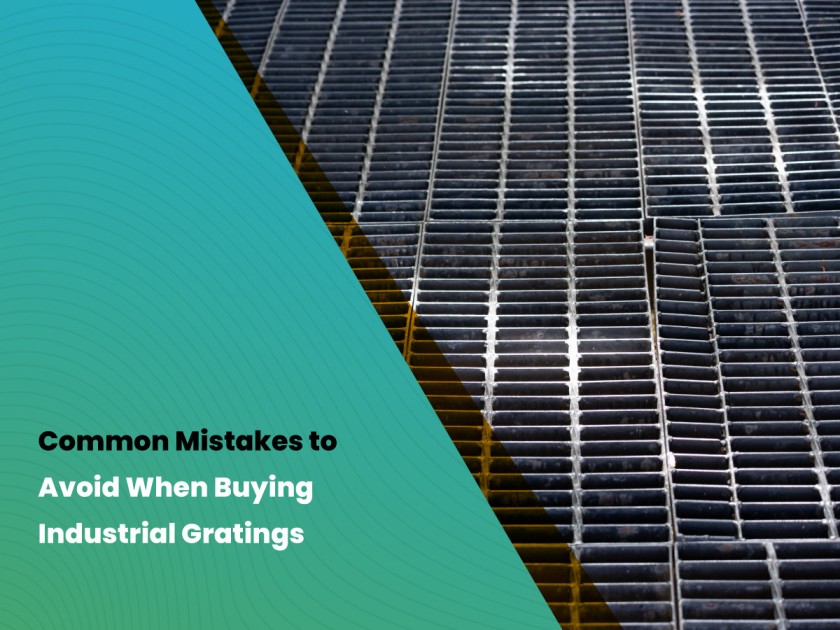
Industrial gratings are load-bearing flooring and structural elements made from metal, typically mild steel, galvanised steel, or stainless steel, fabricated by welding or pressure-locking bearing bars and cross bars into an open grid pattern. They are used across factory floors, mezzanine platforms, walkways, drainage covers, stair treads, trench covers, and equipment access platforms.
The open grid design allows liquid, debris, and light to pass through while still carrying significant loads. That is exactly what makes them the default choice across manufacturing plants, refineries, power stations, water treatment facilities, and warehouses across India and globally.
They look simple. They are not simple to specify correctly.
Why Choosing the Right Grating Actually Matters
Here is the reality of a wrong grating selection: it does not announce itself immediately. The grating gets installed, looks fine for the first few months, and then things start going wrong quietly. A surface starts corroding, a panel deflects more than it should under a loaded trolley, a worker slips on a wet plain-surface grating. By the time the problem is visible, the cost of fixing it, replacement material, downtime, and potential liability is always far higher than the cost of specifying it correctly at the start.
The industrial grating market in India has a wide quality and specification range. Manufacturers supply everything from standard off-the-shelf panels to fully custom-fabricated assemblies. That range is useful, but it also means a procurement decision made purely on price or familiarity, without technical inputs, will regularly produce the wrong outcome.
These are the mistakes that drive those outcomes.
Top Mistakes to Avoid When Buying Industrial Gratings
Mistake 1: Choosing the Wrong Material (MS vs GI vs SS)
This is the single most common and most costly mistake in industrial grating procurement. Material selection is not a cost decision first. It is an environmental decision first.
Mild Steel (MS) gratings are cost-effective and structurally capable. They are the right choice for indoor, dry environments where a paint or primer coat provides adequate protection. Used correctly, in covered warehouses, indoor mezzanines, and dry production areas, MS gratings perform well and offer good value.
The problem starts when MS gratings are specified for outdoor installations, wet process areas, or anywhere that sees regular water, humidity, or chemical exposure. Corrosion sets in faster than most procurement managers anticipate, particularly in coastal regions like Mumbai, Chennai, or Vizag, where salt-laden air accelerates surface degradation. Within two to three years, a panel that looked adequate on the PO is structurally compromised.
Galvanised (GI) gratings have a zinc coating that provides meaningful corrosion protection. For outdoor platforms, walkways exposed to rain, water treatment facilities, and moderate chemical environments, GI is the practical and cost-justified choice. The galvanising adds to the initial cost but eliminates the replacement cycle that MS creates in those environments.
Stainless Steel (SS) gratings, typically Grade 304 or 316, are for serious chemical exposure, food and beverage processing, pharmaceutical plants, and any environment where hygiene standards require it. SS 316 specifically handles chloride environments that destroy 304. The cost is significantly higher, but in the right environment, nothing else holds up.
Match the material to the environment first. Cost follows that decision.
Mistake 2: Ignoring Load-Bearing Capacity
Gratings carry loads. That is their entire purpose. Yet load-bearing capacity is one of the specifications most commonly missing from industrial grating RFQs in India.
The load on a grating depends entirely on what it is serving. A pedestrian walkway, a maintenance access platform, a forklift lane, and a heavy equipment staging area all carry completely different loads. A grating panel designed for one will fail under the conditions of another.
Load capacity in gratings is determined by bar size, that is the depth and thickness of the bearing bars, bar spacing, panel span between supports, and material grade. A 25×3 bearing bar at 30mm pitch spanning 1000mm carries a very different load to a 65×6 bar at 40mm pitch spanning the same distance.
When a project engineer specifies “standard grating” on a drawing without defining load class, they leave that decision to whoever is supplying the cheapest option that day. In a plant where forklifts or heavy trolleys use the same surface, that is a serious structural risk.
Define your load requirement in kN/m² or the specific equipment load before you go to a supplier. Any competent industrial grating manufacturer in Gujarat will size the panel to the load once you provide that information.
Mistake 3: Not Considering the Environment
Material selection covers corrosion. But environment means more than just corrosion.
In chemical plants, the specific chemical matters. Dilute acids behave differently to chloride solutions. Alkaline environments affect different metals differently. Specifying SS 304 in a chloride-heavy chemical environment gives you a grating that pits and fails. SS 316 handles chlorides, 304 does not.
Thermal cycling matters in foundry and furnace areas. Standard gratings in high-heat zones expand and contract repeatedly, and if the fixing system does not allow for movement, panels warp or fixings fail.
Outdoor UV exposure affects any polymer components in clip and fixing systems. This is a detail, but details in the wrong environment become failures.
The question to ask before specifying any grating: what exactly is this grating going to be exposed to, every day, for the next ten to fifteen years? Answer that honestly and the specification follows logically.
Mistake 4: Overlooking Safety Features (Anti-Slip and Serrated Surfaces)
Plain surface gratings look clean. They also become dangerous the moment a surface gets wet, oily, or contaminated with process fluids. In most industrial environments, that is not an unusual condition. It is a daily one.
Serrated bearing bars cut a series of notched teeth into the top surface of the bar, providing grip underfoot even in wet or contaminated conditions. For any walkway, stair tread, platform, or access route where slip risk exists, serrated gratings are not an upgrade. They are the correct specification.
The cost difference between plain and serrated gratings is marginal. The cost difference between a correctly specified anti-slip grating and a workplace slip injury, medically, legally, and in terms of production disruption, is not marginal at all.
In any area with liquid spillage, steam, condensation, cleaning operations, or outdoor exposure, specify serrated. This is non-negotiable from a safety standpoint and increasingly an expectation under industrial safety compliance frameworks.
Mistake 5: Choosing on Price Alone
Price-driven grating procurement is one of the most reliable ways to spend more money over a three to five-year period than a correct specification would have cost upfront.
An MS grating panel that costs 20% less than a GI panel in a wet environment will be replaced within two to three years. Over a ten-year facility life, the MS option costs more in materials, in installation labour, and in production downtime during replacement.
Price is a valid input to a procurement decision. It should not be the primary filter before technical requirements are established. Get the specification right first. Then evaluate the price among suppliers who are meeting that specification.
The other price-related mistake is treating all suppliers offering the same specification as equivalent. Grating quality varies considerably with weld quality, bar tolerance, surface finish, and dimensional accuracy. A panel that meets the drawing on paper but has poor weld penetration at the bearing bar intersections will fail under dynamic loading long before a properly fabricated panel would.
Mistake 6: Not Verifying Manufacturer Quality and Standards
Industrial gratings in India are manufactured to IS standards, and for export or international projects, to ASTM, BS, or DIN standards. Quality varies significantly between manufacturers.
The questions worth asking before placing an order:
Does the manufacturer have in-house fabrication capability or do they assemble from bought-in components? What welding process is used at the bearing bar intersections, resistance welding or manual? What dimensional tolerances do they hold on panel size and bar spacing? Can they provide material test certificates for the steel used?
A manufacturer who cannot answer those questions clearly, or who provides vague assurances rather than documented quality processes, is a risk. Engineering fabrication services from a manufacturer with documented processes and in-house capability give you a very different level of assurance than a trader sourcing from multiple unverified suppliers.
Mistake 7: Ignoring Custom Requirements
Standard grating panels come in defined sizes. Real industrial installations almost never have dimensions that align perfectly with standard panel sizes. Cutouts for columns, pipes, and equipment. Non-rectangular openings. Specific fixing systems for the support structure. Integrated stair nosings on tread panels.
When custom requirements are forced into standard panels, cut-and-patch on site, improvised fixings, panels that overhang their supports, the result is a structurally compromised, visually poor installation that creates maintenance problems for the life of the facility.
Custom-fabricated gratings, sized and detailed for the actual installation, cost more than standard panels. They cost less than the on-site modification labour plus the ongoing maintenance of a poorly fitted installation. For any project with non-standard geometry, custom is the correct starting point, not an upgrade to consider if budget allows.
Real Industrial Examples of Grating Failures
A chemical plant in Gujarat specified MS gratings on their process floor walkways to save cost over GI. Within eighteen months, visible corrosion was present. Within three years, three panels had to be replaced after surface deterioration created safety hazards. The replacement cost, including installation labour and production downtime, exceeded the original cost of specifying GI at the outset.
A warehouse mezzanine in Pune had plain surface gratings installed on access walkways near a wash-down area. Repeated slipping incidents, none serious, fortunately, led to the entire walkway being refitted with serrated panels twelve months after installation. The cost of the rework was entirely avoidable.
A refinery in Rajasthan specified grating panels for a heavy equipment maintenance bay without defining a load class. Under a loaded maintenance trolley, two panels deflected beyond acceptable limits and had to be replaced with heavier sections. The panels were not defective. They were under-specified.
Same outcome, different root cause. All avoidable.
How to Choose the Right Industrial Grating
Work through these decisions in order:
Define the environment first, indoor or outdoor, chemical exposure, temperature, hygiene requirements. That determines material.
Define the load: pedestrian only, light vehicle, heavy equipment, dynamic or static. That determines bar size and spacing.
Define safety requirements. Wet or contaminated surfaces mean serrated. Stair treads always mean serrated.
Define the geometry, standard panel or custom fabrication based on actual installation dimensions.
Then go to a qualified metal grating solutions provider with those inputs and ask them to confirm the specification. A competent supplier will validate or adjust your spec based on experience. One who just accepts whatever you send without technical input is not adding value to your procurement process.
Key Takeaways
Material selection must be driven by environment, not cost. MS, GI, and SS each have the right application and the wrong one.
Load capacity must be defined before procurement, not assumed from a standard panel description.
Serrated gratings are the correct specification for any surface exposed to wet, oily, or contaminated conditions.
Price comparison only has meaning among suppliers meeting the same verified specification.
Custom fabrication is not a luxury for non-standard installations. It is the correct technical choice.
Frequently Asked Questions
Q1. What is the difference between MS, GI, and SS industrial gratings?
MS (mild steel) gratings suit dry indoor environments with paint protection. GI (galvanised) gratings offer corrosion resistance for outdoor and wet environments. SS (stainless steel) gratings handle aggressive chemical and hygiene-critical environments. Each has a specific application range. Using MS where GI is needed, or GI where SS is required, leads to premature failure.
Q2. How do I determine the load-bearing capacity I need for industrial gratings?
Identify the maximum load the grating will carry, whether pedestrian traffic, wheeled equipment, or heavy vehicles, and express it in kN/m² or as a specific point load. Give that figure to your grating manufacturer and ask them to size the bearing bar depth, thickness, and spacing to meet that load over your panel span.
Q3. What are serrated gratings and when should they be specified?
Serrated gratings have notched teeth cut into the top surface of the bearing bars, providing anti-slip grip in wet, oily, or contaminated conditions. They should be specified on any walkway, platform, or stair tread where slip risk exists. In most industrial environments, that covers the majority of installed locations.
Q4. What grating standards apply in India?
Industrial gratings in India are generally manufactured to IS 2062 for the base steel material. For specific structural and dimensional standards, manufacturers may also reference BS 4592 or ASTM specifications, depending on the project requirements. Always ask your supplier which standard the grating is manufactured and tested to.
Q5. Are custom-sized industrial gratings significantly more expensive than standard panels?
Custom gratings carry a fabrication premium over standard off-the-shelf panels, but the difference is smaller than most procurement teams expect, particularly when you factor in the cost of on-site modification, improvised fixings, and the ongoing maintenance issues that poorly fitted standard panels create in non-standard installations.
Q6. How do I evaluate an industrial grating manufacturer’s quality?
Ask for material test certificates, weld procedure documentation, and references from comparable projects. Inspect sample panels for weld quality at the bearing bar intersections, dimensional consistency, and surface finish. A manufacturer with in-house fabrication capability and documented quality processes is a fundamentally different proposition from a trader sourcing from multiple suppliers.
Q7. What causes industrial gratings to fail prematurely?
The most common causes are material and environment mismatch (MS in corrosive conditions), under-specification of load capacity, absence of anti-slip features on wet surfaces, poor weld quality at bar intersections, and improper fixing that does not allow for thermal movement. Most failures trace back to a specification decision made early in the project, which is exactly why getting the specification right at the start matters.
Get High-Quality Industrial Gratings for Your Project
Earth Tech Engineering manufactures and supplies industrial gratings across India. MS, GI, and SS, standard and custom, for platforms, walkways, mezzanines, stair treads, trench covers, and heavy-duty industrial applications.
If your project needs a supplier who will engage with your technical requirements and give you the right specification, not just the cheapest panel that fits the opening, talk to our team before you raise your next PO.